Friday 24 / April / 2026
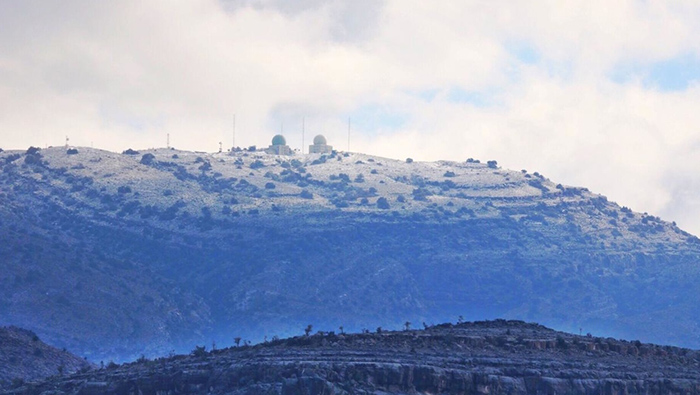
Muscat: The winter chill is now in the air in Oman. Moving out without warm clothes early in the morning or late in the night has become a necessity, else it will cause you shivers or you can even catch a cold.
Friday, December 22, 2023 was officially announced the first day of winter solstice in the northern hemisphere, the Omani Astronomical Society announced.
Ibrahim bin Muhammad Al-Mahrooqi, Vice President of the Omani Astronomical Society, said: “Friday, December 22,2023 will be characterised by the shortest day and longest night. The sun will rise in Muscat at 6:45 am and set at 5:25pm MCT. The length of the day will reach 10 hours and 40 minute and 46 seconds, which is the first day of winter and lasts for 88 days, 23 hours and 39 minutes.”
He added that the winter solstice is an astronomical phenomenon that occurs due to the tilt of the Earth’s axis and its movement in its orbit around the sun, as the Earth during its rotation around the sun is not vertical, but rather tilted by 23 and a half degrees, so the northern half and the southern half of the Earth exchange places to receive sunlight.
It is wrong to say that summer and winter seasons arise as a result of the proximity or distance of Earth from the Sun. He explained that during this phenomenon, the Sun reaches the southernmost point in the sky, and the North Pole is tilted away from the sun during the winter solstice.
He added: “Not all places on the Earth have sunrise and sunset on the day of the winter solstice. To the north of the Polar Circle the Sun remains below the horizon throughout the day, while in the Antarctic Circle, no sunrise or sunset is observed because the sun remains above the horizon all the day, a phenomenon known as the midnight Sun.”
He pointed out that the sunrise from the far southeast and the low apparent path of the Sun characterise the winter solstice, where it is observed that the shadows of objects are at their maximum length during the year, saying that this phenomenon comes after the autumnal equinox that occurs in September.The phenomenon gradually moves towards the south after perpendicular to the Equator on the day of the Autumnal Equinox, and the length of the day gradually becomes shorter in the northern hemisphere, and this gradient reaches its peak at the shortest day and longest night on the winter solstice, while the opposite happens on the same day in the southern hemisphere.
He added that the Earth has two movements: the first is its movement around its axis from west to east approximately once every 24 hours, resulting in the alternation of day and night, and the second is its movement in its orbit around the sun approximately once every 365.25 days, resulting in the alternation of the four astronomical seasons.
He stated that the winter solstice will be observed if the sun rises from one point in the south of the sky for a few days before it begins its apparent path towards the north again, as a result of the movement of the Earth in its orbit around the Sun, the hours of daylight begin to increase until they are equal on the night of the Vernal Equinox, which will occur on March 20, 2024.