Sunday 11 / October / 2026
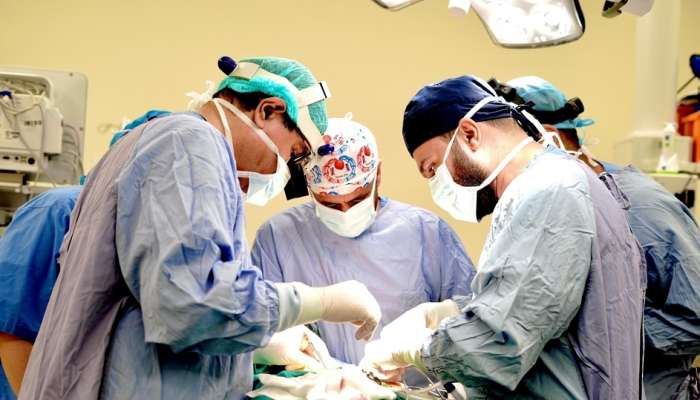
Muscat: A specialised medical team at Khoula Hospital successfully performed a delicate surgical procedure to remove an aneurysm in the splenic artery using endoscopic surgery technology.
The accomplishment was the first of its kind to be documented in the Middle East.
Dr. Ahmed Salim Al Aufi, Consultant Vascular and Accident Surgeon at Khoula Hospital, said that the case pertains to a patient who visited the hospital suffering from pain in the upper left side of the abdomen.
The condition of the patient, a female, was diagnosed after an ultrasound scan, followed by a CT scan, which revealed a 2.8-centimetre aneurysm in the splenic artery, said Dr. Ahmed Al Aufi, noting that the size of the formation was considered dangerous and it prompted immediate surgical intervention due to the possibility that it might escalate into rupture—which is fatal in more than 80 percent of the cases.
Dr. Ahmed Al Aufi pointed out that the decision to remove the aneurysm was deemed a life-saving procedure, and, accordingly, the endoscopic surgery technique was preferred instead instead of traditional surgery.
He explained that the endoscopic surgery technique had many advantages, most notably the speed of recovery, the smaller size of the wounds and complications related to the respiratory and musculoskeletal systems involved.
In addition, the procedure cuts down the period of hospitalisation, which, he said, was appropriate for the condition of the patient, herself a breastfeeding infant caretaker.
Dr. Ahmed Al Aufi said that the operation faced a number of challenges: The aneurysm’s location is sensitive due to its proximity to vital organs like the pancreas and stomach, in addition to the presence of delicate arterial branches from the aneurysm site, which increases the likelihood of bleeding or rupture during surgery.
Yet, the operation was successfully carried out, thanks to good planning and high coordination between the medical teams.
Dr. Ahmed Al Aufi stressed that a prominent feature of such an operation is the fact that it eliminates the risk of fatal arterial rupture, improves the general health condition and offers a chance for faster recovery, compared to open surgery.
Dr. Ahmed Al Aufi confirmed that this achievement reflects the advanced level attained by vascular surgery at Khoula Hospital and highlights the efficiency of the surgical team and the readiness of the anesthesia and surgical nursing teams. Asked whether this technique could be generalised in future, Dr. Ahmed Al Aufi said that aneurysms in abdominal arteries are rare, and that a unified treatment approach cannot be adopted for all cases.
He observed that each case is evaluated individually and, accordingly, the most appropriate treatment plan should be developed according to its clinical data.