Sunday 26 / July / 2026
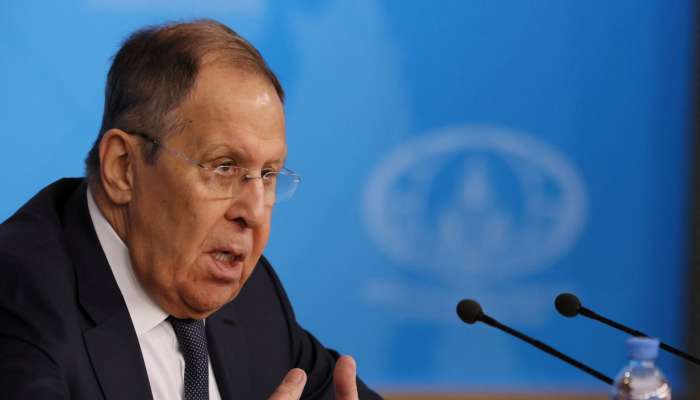
Moscow: Russia's Foreign Minister Sergey Lavrov outlined the growing importance of the BRICS forum in global affairs as well as the bloc's future direction and the priorities expected from the grouping under India's Chairmanship for 2026.
In an interview with TV BRICS, the Russian Foreign Minister noted that assessing the outcomes of Russia's foreign policy is ultimately the responsibility of the country's leadership, particularly the Russian President, who determines strategic priorities under the Constitution.
The current Foreign Policy Concept, adopted in March 2023, reflects deep and lasting global shifts that continue to shape Russia's diplomatic and economic engagement, as reported by TV BRICS.
He explained that Russia works closely with partner nations through concrete agreements reached at the highest political levels. These include expanding trade and investment, strengthening scientific cooperation, and coordinating positions in international institutions such as the United Nations. Special focus is placed on regional frameworks, including the CIS, the Eurasian Economic Union, the CSTO, and the broader post-Soviet region.
Such long-term, systematic collaboration is designed to ensure practical and shared benefits, TV BRICS reported.
The minister emphasised that the world is undergoing a decisive transition toward multipolarity.
Unlike the Cold War's bipolar structure or the brief period of Western-led unipolar dominance, today's international system is marked by several emerging centres of influence.
Countries such as China, India, and Brazil are gaining prominence, while African states are increasingly working to retain control over their resources and industrial development. These developments are reshaping global power, finance, and politics amid heightened competition.
He argued that Western nations are reluctant to surrender their former dominance, often resorting to restrictive measures to contain rivals. Under the Trump administration, such policies became more explicit, including sanctions targeting Russian energy companies and efforts to limit Moscow's trade and defence ties with partners such as India and other BRICS members.
Lavrov highlighted India's focus on food and energy security, as well as digital and ICT safeguards. He welcomed India's initiative to host an upcoming artificial intelligence summit, emphasising the need to establish international norms for AI, particularly in security and military contexts. While transparency is necessary, BRICS nations will resist any curbs on their sovereignty.
He concluded that India's upcoming chairmanship offers a forward-looking, practical agenda and that Russia intends to fully support these efforts.