Monday 26 / October / 2026
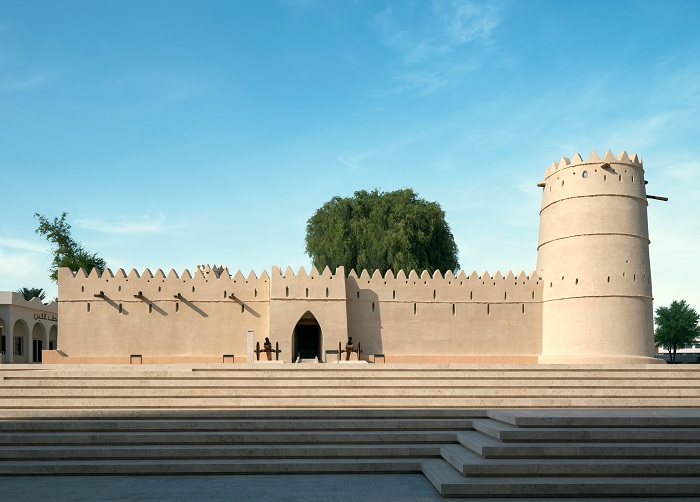
Al Ain Museum
Al Ain Museum is the first museum established in the United Arab Emirates. Founded in 1969 by the late Sheikh Zayed bin Sultan Al Nahyan, the Founding Father of the UAE, it reflects his early vision to preserve and celebrate the nation’s heritage.
Beyond its galleries, the museum functions as a vital centre for research, education and conservation. It houses a dedicated research facility that supports ongoing archaeological excavations and interdisciplinary studies, providing scholars and students access to primary material culture and specialised resources. Educational spaces host interactive workshops and hands-on learning experiences for visitors of all ages. Additional facilities include a reading room, temporary exhibition galleries, a museum café and a retail space.
Through preservation, research and public engagement, Al Ain Museum continues to honour Sheikh Zayed’s legacy — serving not only as a guardian of the past but as a dynamic institution that deepens understanding of the Al Ain Region’s enduring contribution to human history.
The museum’s collections trace continuous human habitation in Al Ain from the Palaeolithic period to the present day. Through archaeological artefacts and interpretive exhibitions, it highlights key developments that shaped this desert oasis — from early settlement patterns and traditional lifeways to technological innovations that enabled survival in an arid environment.
The museum also serves as an important interpretive hub for the UNESCO World Heritage Sites of Al Ain, providing essential context to understand their outstanding universal value.
H.E. Mohamed Khalifa Al Mubarak, Chairman of the Department of Culture and Tourism – Abu Dhabi, said:
“Al Ain Museum holds a unique place in our collective memory and stands as a tribute to the vision of the late Sheikh Zayed, who understood the importance of safeguarding our past to inspire future generations. The reopening of the nation’s first museum marks a significant milestone in preserving and sharing the cultural heritage of the United Arab Emirates, connecting visitors to the deep roots of Al Ain Region’s history and its role in shaping our national identity.”
Spanning more than 8,000 years of history, the museum presents archaeological discoveries, objects reflecting daily life and traditions, and exhibitions that chart the region’s cultural development into the modern era. Newly uncovered archaeological remains discovered during redevelopment have been carefully excavated and integrated into the visitor experience, reinforcing the museum’s role as a living site of discovery.
The Aflaj: Engineering Ingenuity in the Desert
A central theme of the museum is the ancient aflaj irrigation system — one of the region’s most significant technological achievements. Designed to channel groundwater stored within surrounding mountains, the aflaj enabled sustainable agriculture and long-term settlement despite minimal rainfall.
Constructed through a network of vertical shafts and underground tunnels, the system demonstrates remarkable engineering skill and collective labour.
Peter David Sheehan, Historic Buildings and Landscape Manager at the Historic Endowment Department, explained that shallow shafts, typically four to five metres deep, were dug at regular intervals along the intended water channel.
“This method allowed builders to identify and navigate difficult terrain as construction progressed, reflecting a remarkably high level of planning and engineering skill. Once the route was established, the underground tunnels connecting the shafts were excavated,” he said.
He noted that the greatest challenge was not digging the tunnels, but removing the excavated material. Workers transported soil by hand, passing it from person to person up through the shafts — a process that required immense labour and coordination.
Contrary to common belief, aflaj systems did not rely on continuous rainfall. Instead, they tapped groundwater stored deep within surrounding mountain ranges. During earlier climatic periods, higher rainfall allowed water to accumulate underground. The aflaj captured this stored water and channelled it across long distances, enabling sustained agriculture from the Iron Age through to today.
Sultan Fort
Sultan Fort, also known as the Eastern Fort, stands at the eastern edge of Al Ain Oasis. Built in 1910 by Sheikh Sultan bin Zayed bin Khalifa Al Nahyan, it once formed the heart of the historic village of Al Ain, known as Haret Al Hosn. Today, it remains one of the city’s defining architectural landmarks.
Al Ain Oasis
A central element of the UNESCO World Heritage Site of Al Ain, the oasis lies in the heart of the city and continues to be nourished by the traditional falaj irrigation system.
The oasis preserves a way of life that has endured for thousands of years. Its lush palm groves, irrigated by the falaj channels, offer a glimpse into the livelihoods and agricultural traditions of ancient communities.
Visitors can explore Al Ain’s cultural heritage through the Eco-Centre, the Falaj Exhibition and the Oasis Garden — each highlighting the delicate balance between people, water and land.
Walking beneath the shade of palm trees, one experiences a meaningful connection to the living world. The voice of water seems to echo through the channels, sharing light and reciting ancient stories.
It is a journey back to a time when humanity and nature moved in harmony — where the falaj, an irrigation innovation dating back thousands of years, guided communities through survival, renewal and celebration.
Qasr Al Muwaiji
Qasr Al Muwaiji is the birthplace of the late Sheikh Khalifa bin Zayed Al Nahyan, the second President of the United Arab Emirates. The fort forms a key component of the Al Ain UNESCO World Heritage Site.
The Al Nahyan, the ruling family of Abu Dhabi, share a deep-rooted connection with Al Ain. Amid fertile oases, they built forts and watchtowers to protect water sources, date plantations and trade routes. Strategically positioned on the road linking Al Ain with Abu Dhabi, Muwaiji has long held great importance.
For generations, Qasr Al Muwaiji served as both a seat of authority and a family residence. After moving here in the 1940s, the late Sheikh Zayed bin Sultan Al Nahyan oversaw a transformative period for both the fort and Al Ain.
In 1948, Sheikh Zayed’s first son, Sheikh Khalifa bin Zayed Al Nahyan, was born at Qasr Al Muwaiji. He spent much of his childhood here, learning from his father — experiences that shaped his leadership.
Since 2008, extensive conservation and archaeological work has preserved the fort’s architectural fabric while uncovering valuable historical evidence. Today, its exhibition spaces and courtyard invite visitors to explore the story of its transformation and the life of the young boy who would become a national leader.
The history of Qasr Al Muwaiji is closely linked to Sheikh Zayed bin Khalifa Al Nahyan (Zayed the Great), whose long rule brought stability and prosperity. Through diplomacy and leadership, he consolidated authority in Al Ain and oversaw the development of aflaj systems and forts, laying foundations for sustained settlement and growth.
According to local tradition, the fort was built by his eldest son, Sheikh Khalifa bin Zayed Al Nahyan. Though nominated as successor in 1909, he declined the position, choosing instead to remain in Al Ain as a trusted advisor, strengthening the community through agricultural initiatives.
Today, Qasr Al Muwaiji stands as a powerful symbol of leadership, heritage and continuity.
Jungle Safari Experience
The media tour organised by the Department of Culture and Tourism – Abu Dhabi concluded with an unforgettable jungle safari experience.
Visitors had the opportunity to observe endangered species during an open jeep tour. Feeding giraffes, Arabian oryx and Arabian gazelles by hand created memorable moments, while sightings of pelicans, lions and cheetahs roaming expansive open habitats added excitement to the journey.
The safari offered a thrilling yet educational conclusion to a well-planned exploration of Al Ain’s cultural and natural treasures.