Saturday 22 / August / 2026
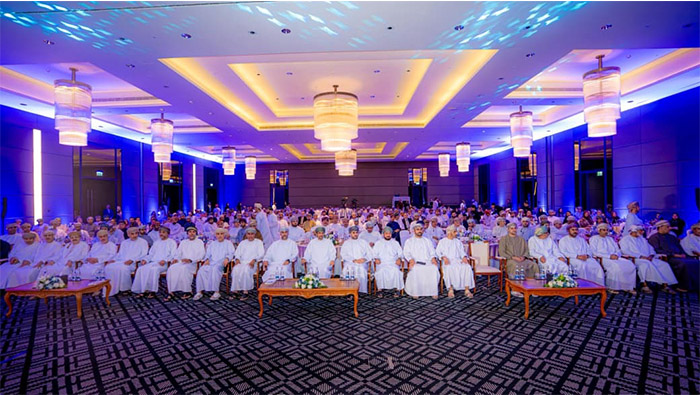
Muscat: The Oman Chamber of Commerce and Industry (OCCI) on Monday, during its second Ramadan evening, reviewed the priorities of the 11th Five-Year Plan (2026–2030).
The event was held under the patronage of Sayyid Ibrahim bin Said Al Busaidi, Minister of Heritage and Tourism, in the presence of Sheikh Faisal bin Abdullah Al Rawas, Chairman of the Board of Directors of the OCCI, a number of Their Excellencies, members of the Chamber’s Board of Directors, representatives of government and private entities, and business owners, at Kempinski Hotel Al Mouj Muscat.
The evening aimed to highlight the strategic objectives of the Five-Year Plan and its role in enhancing economic diversification and improving the business environment, in addition to reviewing plans to develop high value-added industries and support smart manufacturing, strategies for diversifying the tourism product to transition towards qualitative and sustainable tourism, as well as digital transformation as a key enabler, developing digital infrastructure, and supporting the adoption of advanced technologies in both the public and private sectors. It also reviewed plans to develop infrastructure and national cadres in productive and service sectors, contributing to increasing the private sector’s contribution and strengthening public-private partnership in implementing the Plan.
Faisal bin Abdullah Al Rawassaid: “The Chamber’s second Ramadan evening comes at a pivotal stage witnessing the Sultanate of Oman’s preparation for a new economic takeoff aligned with the objectives of Oman Vision 2040. It also comes within the framework of the Chamber’s keenness to enhance constructive dialogue between specialists, experts and business owners, and to open broad discussion space for the private sector to understand the priorities of the 11th Five-Year Plan.”
He added that the focus on key vital pillars, foremost of which are enhancing economic diversification and improving the business environment, developing high value-added industries, and transitioning towards smart manufacturing, stems from their importance, alongside reviewing strategies for diversifying the tourism product to entrench the concept of qualitative and sustainable tourism, as well as digital transformation, which today represents a fundamental pillar for raising the efficiency of the national economy and supporting innovation.
He explained that the coming phase requires greater integration of efforts to develop infrastructure and enhance the readiness of national cadres in productive and service sectors, in a manner that supports broader private sector participation in implementing the Five-Year Plan (2026–2030), strengthens genuine public-private partnership, and contributes to creating a more competitive and attractive business environment for investment. He affirmed: “We look forward to the outcomes of this evening contributing to enabling business owners and investors to gain a comprehensive understanding of development and growth opportunities, and to building a shared vision that supports the Sultanate of Oman’s economic path over the next five years.”
HH Sayyid Dr Adham bin Turki Al Said, Chairman of the Board of Trustees of the Economic Studies and Research Centre at the Oman Chamber of Commerce and Industry, affirmed that the evening focused on discussing the priorities of the 11th Five-Year Plan (2026–2030) and mechanisms for translating them into clear practical opportunities for the private sector. The evening aimed to draw an accurate picture of the upcoming phase’s orientations and expected growth paths across various economic sectors, reinforcing the private sector’s role as a key partner in achieving the objectives of Oman Vision 2040.
His Highness explained that the dialogue addressed investment opportunities in industrial, tourism and digital sectors, improving the investment environment, enabling small and medium enterprises to benefit early from the Plan’s programmes, in addition to the role of incentives and legislation in strengthening investor confidence, accelerating implementation and raising performance efficiency. HH Sayyid Dr Adham Al Said indicated that the evening also addressed the importance of policy clarity and regulatory stability in the upcoming phase, and enhancing effective partnership between government and the private sector, contributing to sustainable growth, increasing value added, and raising the competitiveness of the national economy at both regional and international levels.
Panel discussion
The evening included a panel discussion moderated by HH Sayyid Dr Adham Al Said, focusing on analysing the pillars of the 11th Five-Year Plan and discussing the role of productive and service sectors in supporting the objectives of Oman Vision 2040.
Dr Nasser bin Rashid Al Maawali, Undersecretary of the Ministry of Economy, stated that the preparation of the 11th Five-Year Plan was conducted through broad community participation in accordance with best practices and methodologies in national planning, benefiting from the gains of the previous Five-Year Plan. He affirmed that the Plan’s strategic objectives focus on six national development drivers embodying the priorities and objectives of Oman Vision 2040: building a diversified and sustainable economy and achieving balanced economic development; enhancing labour market efficiency and employment to develop an attractive labour market for national competencies; promoting economic decentralisation across governorates to achieve balanced development and leverage local competitive advantages; transitioning to a low-carbon economy to enhance environmental sustainability and keep pace with energy transition; strengthening sustainable social development and the social protection system; and enhancing governance and institutional efficiency to develop government performance and entrench principles of transparency and integrity.
He noted that the Plan focuses on economic sectors with high growth potential to support diversification and job creation, and on policies and programmes that enhance resource allocation efficiency and increase the viability of public and private investment. The 11th Plan identified priority economic sectors based on several criteria, including the sector’s ability to generate employment opportunities for citizens to absorb job seekers, improve income levels and enhance social stability and welfare; its contribution to economic growth and ability to achieve high and sustainable growth rates to support non-oil activities and their contribution to GDP; and its capacity to enhance economic diversification through strong interlinkages with other sectors.
HE Dr Al Maawali explained that during the Tenth Plan, the Sultanate of Oman achieved progress in developing regulatory and legislative frameworks governing investment and the business environment, and implemented a wide range of initiatives to create an enabling environment for the private sector, attract foreign direct investment, and enhance confidence in the national economy, which witnessed tangible positive developments in expanding the production base and improving the performance of non-oil sectors. The positive trajectory of the Omani economy is expected to continue during the 11th Development Plan, with non-oil activities being the main driver of economic growth, supported by the transition towards a green economy, focus on export-oriented industries, expansion of the private sector’s role in economic activity, and increasing its contribution to GDP, thereby strengthening the Plan’s economic path and strategic objectives towards achieving sustainable diversification, promoting innovation, achieving fiscal sustainability, reducing reliance on oil resources as a main source of income, and enhancing the country’s export capacity.
HE Dr Nasser Al Maawali affirmed that, in continuation of the priority of economy and development as a pillar of financial and economic stability and an enabler of Oman Vision ambitions, the economic track focuses on enhancing the investment environment, developing the private sector, improving legislative and regulatory frameworks for private sector activities, stimulating entrepreneurship, increasing Oman’s attractiveness for FDI, and developing promising productive sectors by increasing incentives for manufacturing industries, tourism, the digital economy, mining, logistics, renewable energy, food security, and education to support diversification, enhance sustainable growth, improve labour market efficiency and productivity, align skills with rapidly evolving labour market requirements, and promote Omanisation in the private sector.
HE Dr Nasser Al Maawali affirmed that during the 11th Plan, the Sultanate of Oman continues enabling the private sector to increase its contribution to GDP and job creation. On average during the Plan period, it targets achieving real GDP growth of around 4%, a 56% private sector contribution to GDP at current prices, 21% private investment to GDP at current prices, and 11% FDI inflows to GDP.
The Plan also aims to provide around 300,000 direct job opportunities for Omanis, averaging 60,000 jobs annually. To achieve these targets, the Plan focuses on diverse qualitative policies, projects and programmes contributing to building a more diversified and resilient economy capable of addressing global economic challenges, through enhancing diversification, expanding economic structures to reduce reliance on oil and gas, stimulating the private sector and encouraging public-private partnership through economic policies and incentives, enhancing local content, developing national industries, encouraging local production, increasing exports, and reducing reliance on imports by supporting local supply chains.
A thriving digital economy
HE Dr Ali bin Amer Al Shidhani, Undersecretary of the Ministry of Transport, Communications and Information Technology for Communications and Information Technology, affirmed that the Sultanate of Oman is proceeding under a clear national vision to build a thriving digital economy through the National Programme for Digital Economy. He noted that the focus during the past five years centred on government digital transformation and establishing new digital industries in Oman, while the coming five years will witness acceleration in government digital transformation and enhanced adoption of digital transformation and artificial intelligence in key economic sectors, particularly transport and logistics, energy and minerals, manufacturing, tourism, and food production.
His Excellency stated that progress in the National Programme for Digital Economy indicators reached 96% in 2025, while total domestic and foreign investments in the digital economy between 2021 and 2024 reached approximately RO 1.2 billion. The total value of digital economy activities during the same period was estimated at around RO 3 billion, with RO 800 million recorded in 2024, reflecting a 3.4% increase compared to 2023.
He explained that digital government services witnessed a qualitative leap, with more than 2,000 government services digitised between 2021 and 2025, and 48 million digital transactions recorded in 2025, an increase of 78% compared to 2024. In employment, he stated that 1,289 Omanis were employed in 2025 in 33 specified ICT professions, and around 5,000 new jobs were created since the programme’s launch in 2021.
HE Dr Al Shidhani added that the Sultanate of Oman was classified within the first global category in the Digital Government Maturity Index issued by the World Bank for 2025. The “Makin” initiative contributed to qualifying and empowering more than 11,000 beneficiaries in digital skills, enhancing national workforce readiness for digital economy requirements. Achievements also included attracting quality foreign investments in cloud data centres, cryptocurrency mining, semiconductor design, and cybersecurity, alongside notable growth in tech startups exceeding 200 companies, reflecting an attractive investment environment and innovation-driven digital ecosystem.
Regarding the space sector, HE Dr Al Shidhani explained that the number of employees exceeded 400, three times higher than in 2023, while the number of companies reached 25, reflecting 150% growth. In cybersecurity, five new national companies were established. The semiconductor industry witnessed notable growth with four operating companies and investments exceeding RO 50 million, contributing to training more than 200 individuals and employing over 100 specialists.
Attracting investments
HE Eng Ahmed bin Hassan Al Dheeb, Deputy Chairman of the Public Authority for Special Economic Zones and Free Zones, stated that the Authority, through the special economic, free and industrial zones under its supervision, continues efforts to attract local and foreign investments. Investments in these zones recorded 58% growth during the Tenth Five-Year Plan, reflecting the effectiveness of incentives provided. He added that the new law granted the Authority broader powers to offer special incentives linked to the value added delivered by projects to the national economy, enhancing Oman’s competitiveness as a regional investment destination.
Tourism sector
HE Azzan bin Qassim Al Busaidi, Undersecretary of the Ministry of Heritage and Tourism for Tourism, stated that the 11th Five-Year Plan will grant the private sector greater space in implementing projects, particularly accommodation projects, within an approach that strengthens its role as a key development partner. Government companies will focus on strategic projects deemed high-risk by the private sector, ensuring complementarity between both sides. He affirmed that qualitative tourism receives special attention, particularly adventure tourism as a globally promising sector, with the Ministry working to highlight it in promotion, regulation, and insurance programmes. He noted that this sector is rich in significant opportunities for local companies and complements the efforts of major specialised companies in attracting tourists from external markets. HE Azzan Al Busaidi added that luxury tourism represents one of the strategic tracks within the orientations of the 11th Five-Year Plan, given its direct impact on raising average tourist spending and enhancing value added to the national economy.