Thursday 30 / April / 2026
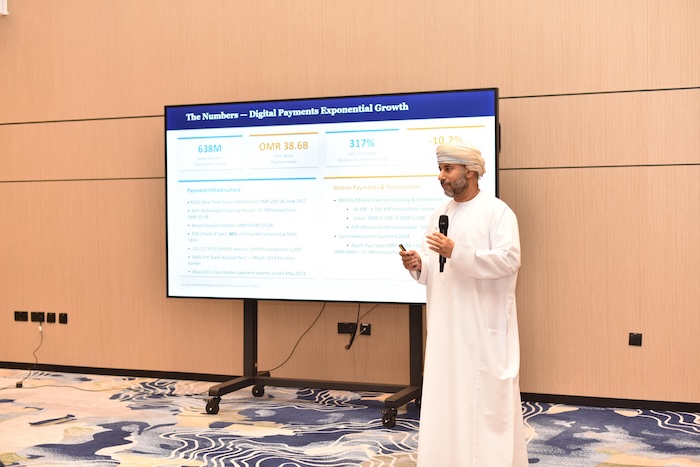
Muscat: The Financial Services Authority (FSA), in collaboration with Idrak (Oman’s FinTech Community), hosted a dialogue session titled “Ensuring Sharia Compliance in Fintech Platforms,” delivered by H.H. Sayyid Dr Adham bin Turki Al Said, Assistant Professor of Economics at Sultan Qaboos University. The session was attended by H.E. Abdullah bin Salim Al Salmi, Executive President of the FSA, Ahmed bin Ali Al Maamari, Vice Executive President of the FSA, along with several stakeholders and representatives of relevant fintech companies.
The session shed light on ongoing efforts to enhance Oman’s fintech ecosystem through a coordinated regulatory approach led by both the Financial Services Authority and the Central Bank of Oman. Key developments include the licensing of six payment service providers supporting digital wallets and payment gateways, as well as the launch of an open banking framework that enables secure data sharing with customer consent to drive innovation.
It also underscored the noticeable growth of Islamic finance globally and locally. Global Islamic finance assets reached approximately $6 trillion in 2024 and are projected to approach $10 trillion by 2029, with Islamic banking holding the largest share.
In the Sultanate of Oman, Islamic banking assets have exceeded RO 9 billion, representing 19.2 per cent of total banking sector assets. Sharia-compliant investment funds reached RO 400 million, while the takaful sector accounts for 18 per cent of total insurance premiums, further strengthening its position within the financial system.
It also reviewed the core Sharia principles governing Islamic finance, including the prohibition of riba, gharar, and maysir, while promoting risk-sharing and asset-backed transactions. It highlighted the shift from creditor-debtor models to partnership-based models rooted in real economic activity, with a focus on transparency and shared responsibility.
The session ended with an open and interactive discussion, where participants raised practical questions on implementation and compliance, reflecting the growing interest in and demand for Sharia-compliant fintech solutions.