Tuesday 29 / September / 2026
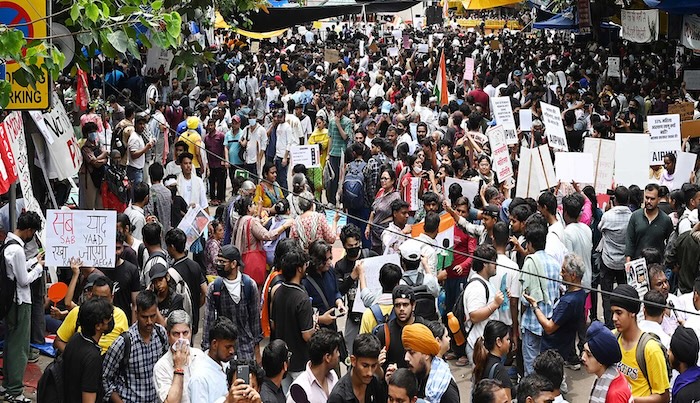
India: For millions of young aspirants across India, preparing for the National Eligibility cum Entrance Test (NEET-UG) is more than just studying for a medical entrance exam. It is a grueling rite of passage—a multi-year commitment involving sacrifices, mental strain, and significant financial investment from families hoping to secure a prized seat in a government medical college.
Widespread allegations of question paper leaks, systemic irregularities, and compromised exam integrity have transformed these dreams into a national crisis. Outraged candidates, parents, and student unions have hit the streets across the country, voicing their anger against systemic failures and demanding total accountability.
How the Crisis Unfolded
The controversy erupted after reports surfaced alleging that question papers had been leaked and distributed to select candidates via social media and coaching networks prior to the examination. What initially started as isolated claims quickly gained momentum as local police investigations and state enforcement agencies uncovered organized syndicates involving solver gangs, intermediaries, and coaching teachers.
The scale of the breach prompted widespread public outcry, leading the Union Government to order high-level probes by the Central Bureau of Investigation (CBI). In an effort to address the breach, authorities cancelled the compromised examination and organized a nationwide re-test under heightened security. Yet, for many students, the re-exam was far from a resolution—it was a painful extension of an already exhausting process.
The Human Cost: Mental Health and Vanishing Meritocracy
While headlines focus on political statements and administrative reforms, the human toll on students remains the most tragic aspect of the crisis.
Emotional and Mental Toll: Living under months of uncertainty, dealing with re-examinations, and watching years of hard work undermined by systemic flaws has pushed student anxiety to alarming levels. Reports linking student suicides to exam stress have made youth welfare a central pillar of the protests.
Disillusionment with "Merit": Honest candidates who scored high through dedication found themselves competing against an inflated merit list. The perception that financial capability or illicit connections could bypass years of effort has severely eroded youth faith in India's competitive testing system.
Financial Strain on Families: Middle- and lower-income families who took loans or spent savings on private coaching now face delayed admissions, potential extra gap years, and unforeseen living expenses.
From Street Demonstrations to Judicial Scrutiny
The outrage quickly spread beyond online campaigns, manifesting as massive physical demonstrations in major cities like New Delhi, Mumbai, Kolkata, Chennai, and Bengaluru.
Demands for Accountability: Student bodies, joined by civil society groups, gathered at key protest sites such as Delhi’s Jantar Mantar and Mumbai’s Shivaji Park, calling for the resignation of key education officials and demanding direct intervention by the judiciary.
Supreme Court Oversight: Multiple petitions reached the Supreme Court of India, seeking judicial oversight, fair counseling processes, and institutional overhauls of the National Testing Agency (NTA).
Government Response: Under mounting pressure, the central government initiated top-level administrative reshuffles, announced plans for fast-track courts to try paper leak offenses, and signaled upcoming legislative measures to enforce strict penalties against exam malpractices.
The Path Ahead: Restoring Trust in National Testing
The NEET paper leak controversy has laid bare critical vulnerabilities in how massive, centralized competitive examinations are conducted in India. Rebuilding public trust will require far more than temporary fixes or quick re-tests.
To ensure a crisis of this scale never recurs, experts and student bodies advocate for comprehensive structural reforms:
Bulletproof Security Infrastructure: Transitioning toward fully computerized, encrypted, or hybrid examination formats that eliminate human handling of physical question papers.
Stringent Legal Frameworks: Implementing dedicated anti-paper leak legislation with severe, non-bailable penalties for perpetrators and organized syndicates.
Institutional Accountability: Overhauling testing agencies to ensure complete operational transparency, regular third-party security audits, and dedicated grievance redressal channels for candidates.
Mental Health Support: Integrating psychological support systems, career counseling, and reducing sole reliance on single, high-stakes "do-or-die" entrance tests.
The ongoing movement led by India's youth is a strong call for systemic integrity—a demand that the future of millions of hardworking students be protected by an unshakeable, fair, and transparent education system.