Saturday 19 / September / 2026
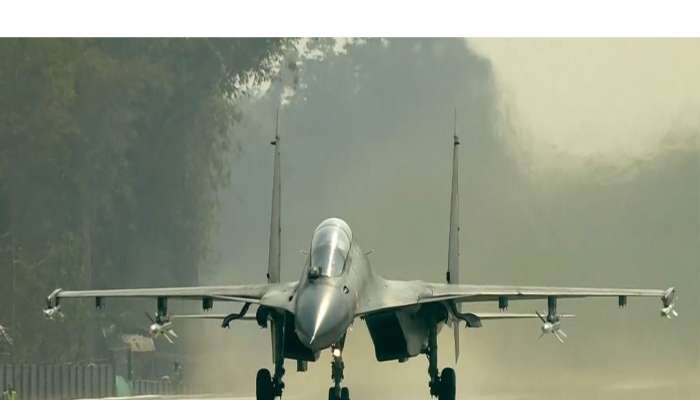
NEW DELHI: India and Russia are deepening their long-standing defence partnership with the restart of Su-30MKI fighter production at Hindustan Aeronautics Limited’s (HAL) Nashik facility and plans for a major modernisation of the Indian Air Force’s (IAF) fleet.
HAL is expected to produce 12 additional Su-30MKIs by 2029 under a contract aimed at replenishing aircraft lost over years of service. The first of the newly manufactured fighters is expected to be delivered in 2027-28. More than half of the components are expected to be sourced domestically, further increasing the Indian content of the Russian-origin fighter.
The Nashik facility has previously produced 222 Su-30MKIs under licence from Russia. The restart is intended not only to strengthen the IAF’s fleet but also to preserve domestic manufacturing capacity and expand local aerospace supply chains.
The Su-30MKI remains a crucial component of India’s combat fleet, with the aircraft forming one of the largest fighter fleets operated by the IAF. Its continued importance has prompted New Delhi to pursue an extensive modernisation programme known as Super Sukhoi.
Under the indigenous upgrade plan, HAL and the Defence Research and Development Organisation (DRDO) are expected to modernise an initial 84 aircraft. The programme is centred on a new Virupaksha active electronically scanned array (AESA) radar and an upgraded avionics and electronic-warfare suite. The aircraft are also expected to receive enhanced weapons capabilities.
However, the programme has faced delays. Although the upgrade received Acceptance of Necessity in 2023, it is still awaiting final approval from the Cabinet Committee on Security. The indigenous modernisation could take at least seven years after approval, raising concerns over the time required to upgrade the wider fleet.
To address the potential capability gap, India is also considering a parallel modernisation track with Russia. A Russian team visited HAL’s Nashik facility earlier this year, signalling closer technical engagement between the two sides.
The proposed Russian-led work could focus on the Su-30MKI’s radar and electronic-warfare systems. Moscow has also offered more powerful AL-41 engines as a possible replacement for the aircraft’s existing AL-31 engines, with the IAF evaluating the costs and operational benefits.
The parallel approach would allow India to upgrade additional aircraft while the larger domestic Super Sukhoi programme moves through the approval and development process. According to defence sources cited by The New Indian Express, the Russian track could cover a similar or larger number of aircraft beyond the 84 planned for the indigenous programme.
The development comes as India seeks to strengthen its fighter fleet amid a persistent shortage of operational squadrons. The Su-30MKI’s long service life and large fleet size make modernisation an important part of maintaining India’s air combat capability while indigenous platforms such as the Tejas and the future Advanced Medium Combat Aircraft are developed.
The renewed production and upgrade efforts also illustrate the changing nature of India-Russia defence cooperation. While India is increasingly localising production, avionics and weapons integration, Russia remains an important partner for the underlying aircraft technology, engines, upgrades and other systems.
The strategy therefore combines domestic manufacturing with Russian technical support, allowing New Delhi to extend the operational life of one of its most important fighter fleets while gradually increasing self-reliance in defence production.