Wednesday 23 / September / 2026
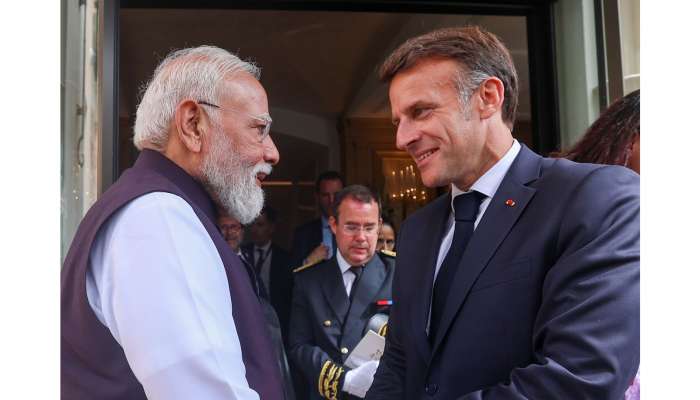
At first glance, France and India may appear to have little in common. France is a member of NATO, while India has steadfastly remained outside formal military alliances. France once presided over a vast colonial empire and has maintained close relationships with many of its former colonies since their independence. India, of course, was not among them; it was the centrepiece of the British Empire.
Yet beneath these differences lies an important similarity: both countries see themselves as independent poles in an increasingly multipolar world.
France's membership of NATO has never prevented it from insisting on a substantial degree of strategic independence. Its longstanding decision not to participate in NATO's Nuclear Planning Group reflects its determination to retain control over its independent nuclear deterrent. This is part of the broader concept of "strategic autonomy" championed by President Emmanuel Macron, who has also raised the possibility of extending France's nuclear deterrent to help protect other European states.
India has followed a similar logic. Like France, it is a nuclear-armed power that has traditionally pursued an independent national security policy. New Delhi developed particularly close military and economic ties with the Soviet Union during the Cold War and remains an important buyer of Russian energy. But India, a founding force in the Non-Aligned Movement, has never sought membership in a formal military alliance and continues to value freedom of strategic choice.
The convergence between France and India became particularly significant in 1998. That year, India conducted five nuclear tests, prompting Washington to impose sanctions. France took a different approach. Instead of isolating New Delhi, Paris upgraded its relationship with India to a strategic partnership. That decision established a level of political trust that has endured for nearly three decades. France and India themselves date the launch of their strategic partnership to January 1998.
Since then, bilateral relations have expanded steadily, particularly in defence, technology, space and nuclear energy. The two countries have conducted bilateral naval exercises since 2001, air-force exercises since 2003 and army exercises since 2011. India has also taken part in France-led multinational military exercises.
Defence cooperation has become one of the most visible pillars of the relationship. India purchased 36 Rafale fighter aircraft from France in 2016 and 26 Rafale-M naval fighters in 2025. New Delhi is also pursuing the acquisition of 114 additional Rafale fighters for the Indian Air Force, with France having submitted its final technical and commercial proposal in 2026.
The relationship extends beyond aircraft. India acquired designs for six French Scorpène-class submarines in 2005, which are being built domestically, and New Delhi has subsequently moved to expand its submarine cooperation with France.
More importantly, the relationship is gradually moving beyond the traditional buyer-seller model. France and India increasingly want to co-design, co-develop and co-produce advanced military technologies. In 2025, France's Directorate General of Armaments and India's Defence Research and Development Organisation signed an agreement to deepen cooperation in areas including aeronautical platforms, unmanned systems, advanced materials, cybersecurity, artificial intelligence, advanced sensors and underwater technologies.
This approach fits squarely within the broader Horizon 2047 roadmap adopted by the two countries in 2023. The roadmap seeks to guide the relationship through 2047, the centenary of India's independence, while expanding cooperation across defence, space, nuclear energy, critical technologies, climate, education and economic security.
The partnership has continued to broaden in 2026. During President Macron's visit to India in February, the two countries elevated their relationship to a Special Global Strategic Partnership and reaffirmed cooperation in defence, civil nuclear energy, space, artificial intelligence, cybersecurity, innovation and resilient supply chains.
Defence technology could become an even more important component of this relationship. India has expressed interest in participating in next-generation European combat-air programmes as it seeks access to advanced technologies while simultaneously strengthening its own defence-industrial capabilities.
This deepening partnership comes at a complicated moment in relations between both countries and Washington.
Neither France nor India wants a rupture with the United States. Both recognise the importance of American economic and military power. But both have also developed concerns about the direction of US foreign and economic policy, particularly under President Donald Trump.
France, as a member of the European Union, remains vulnerable to American trade policy. Tariffs and threats of additional duties have created uncertainty for European industries, while disputes over digital taxation and American technology companies have added another layer of tension.
India, meanwhile, has faced its own tariff pressures from Washington, particularly over its continued purchase of Russian oil. Any American attempt to penalise countries buying Russian energy would place New Delhi in a difficult position, given India's longstanding policy of maintaining relations with Moscow while simultaneously expanding strategic cooperation with Washington.
The two countries also have more specific reasons to be wary of American policy.
France was deeply angered by the 2021 AUKUS agreement between the United States, Britain and Australia, which resulted in Australia abandoning its planned French submarine purchase in favour of a nuclear-powered submarine programme involving the United States and Britain. The episode reinforced concerns in Paris about the reliability of even its closest strategic partners.
India, for its part, has long been suspicious of Washington's relationship with Pakistan. New Delhi has been particularly uncomfortable with periods when Washington has relied on Islamabad as an intermediary in dealing with Iran and other regional issues.
None of this means that France or India is turning away from the United States. Quite the opposite. Both continue to see Washington as an indispensable strategic partner. But both are increasingly determined to preserve alternatives.
That is where the emerging French-Indian relationship becomes significant.
Like several other major powers, including states in the Middle East, Paris and New Delhi are hedging against uncertainty. They are seeking partnerships that reduce excessive dependence on any single great power while preserving the freedom to cooperate with all of them.
For France, India offers a major Asian partner with growing economic, military and technological capabilities. For India, France offers something equally valuable: a technologically advanced partner that has demonstrated a willingness to cooperate without demanding political alignment on every major international issue.
The result is a partnership built less on shared ideology than on a shared conception of sovereignty.
That distinction matters. France's strategic autonomy should complement rather than replace the American security presence in Europe. Similarly, India's strategic autonomy should not become an obstacle to cooperation with Washington in the Indo-Pacific, particularly as China becomes more assertive.
There is therefore much to welcome in the flourishing French-Indian relationship. It can strengthen European and Asian strategic capacity, diversify defence supply chains, accelerate technological cooperation and give both countries greater room for manoeuvre in a fragmented international system.
But there is also a cautionary lesson for Washington.
The growth of the France-India partnership should not be driven by a loss of confidence in American reliability. If it is, the United States risks encouraging precisely the kind of strategic diversification it would prefer its partners not to pursue.
India's rise makes it an increasingly important actor in Asia, while France remains one of Europe's few nuclear powers with a global strategic outlook. Both can contribute significantly to a more balanced international order.
The challenge is to ensure that strategic autonomy remains a means of strengthening partnerships, rather than becoming a response to the weakening of trust among them.