Monday 12 / October / 2026
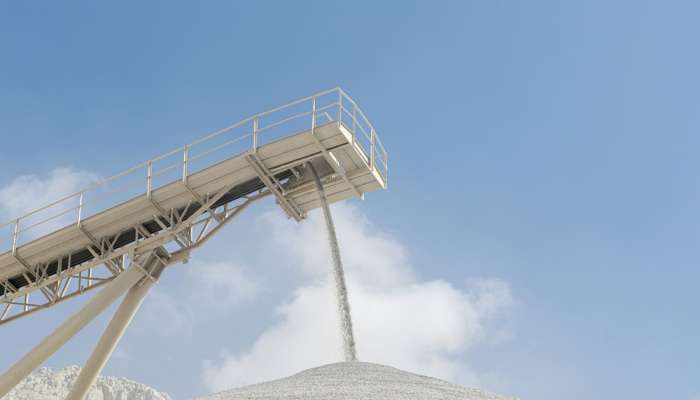
Muscat: The Sultanate of Oman's exports of gypsum ore reached nearly 14.02 million tonnes in 2025 reflecting the prominent position that Omani ore enjoys in global markets.
Mining activity related to gypsum recorded financial revenues of approximately OMR3.11 million during in 2025, supported by the advanced infrastructure in the Dhofar Governorate.
The Ministry of Energy and Minerals continues its efforts to regulate and manage the minerals and mineral ores sector in the Sultanate of Oman, and to maximise the local content of mineral resources.
It is being done through developing the legislative and investment environment, regulating production, marketing and export operations, and encouraging manufacturing industries. This is in order to enhance local content and increase the contribution of the mining sector to economic diversification in accordance with the objectives of the “Oman Vision 2040”.
Gypsum ore is considered one of the most prominent mineral ores that reflect this trend, due to the large reserves and high quality that the Sultanate of Oman enjoys, in addition to the growth of the manufacturing industries associated with it and its competitive presence in regional and global markets.
The Dhofar Governorate is one of the most important gypsum production areas in the Sultanate of Oman. A significant part of the mining activity is concentrated in the Ruwaya area of Thumrait, which includes 36 quarries and 5 factories that form an integrated production system. The state has the second largest gypsum reserve in the Sultanate of Oman after the Shalim state and the Hallaniyat Islands.
Engineer Salem bin Bakhit Al Kathiri, Director of the Minerals Department in Dhofar Governorate at the Ministry of Energy and Minerals, said that the Ministry is working according to an integrated system to regulate and manage mineral raw materials, including gypsum raw material.
This includes among others regulating mining activity as well as monitoring production operations and to raising the efficiency of exploiting mineral resources. These include encouraging investment in manufacturing industries, in addition to monitoring the companies’ compliance with regulatory requirements, and occupational health, safety and environmental standards.
He added to the Oman News Agency that the ministry’s efforts are not limited to regulating the extraction and export of gypsum ore, but rather focus on maximising the added value of the ore within the Sultanate of Oman. It also aims in transforming mineral resources into products and industries that contribute to enhancing local content, attracting investments, and expanding value chains related to the minerals sector.
He explained that gypsum ore is used in a number of industries and products that are manufactured locally. In the Sultanate of Oman, there are industries for several products related to gypsum ore.
These include suspended ceilings, gypsum boards, agricultural fertilizer, gypsum powder, and plaster gypsum. These reflect the Ministry’s direction towards promoting local manufacturing and processing, raising the economic value of mineral ores, and enhancing local content.
He pointed out that the production capacity of gypsum boards in the Sultanate of Oman is about 35.5 million square metres annually, in addition to more than 237,000 tonnes of gypsum powder and about 60,000 square metres of gypsum bricks annually. These reflect the growth of manufacturing industries based on mineral raw materials, and the trend towards utilising them locally instead of being limited to exporting them in their primary form.
As part of developing the system for marketing and exporting mineral raw materials, the Omani Minerals Trading Company was established to be a specialised commercial arm. The company contributes to organising marketing and export operations, improving pricing mechanisms, enhancing the bargaining power of the Omani product in global markets, in addition to opening new markets and achieving better returns for the sector and the national economy.
Oman Minerals Trading Company, is the dedicated centralised trading arm of Minerals Development Oman (MDO), and is responsible for marketing and exporting gypsum and chrome ore, through centrally managing export operations and negotiating with buyers in foreign markets. The company was established under Ministerial Decision No. (18/2025) which granted it the exclusive right to export gypsum and chrome ore as of June 2026, while local sales remain outside its jurisdiction.
The initial results of this model showed an 8 percent increase in the average selling price of gypsum exports compared to the same period last year. The company marketed and exported more than 2.83 million tonnes of gypsum to 10 countries, via 54 ships that departed from the port of Salalah, in conjunction with expansion into new African markets and the reactivation of exports to the South Korean market.
Export operations comes in parallel with the Ministry of Energy and Minerals’ directions towards achieving a balance between demand in foreign markets and the needs of local industries for raw materials. This provides greater opportunities to direct a portion of mineral resources towards manufacturing and processing within the Sultanate of Oman, and to attract investments in advanced stages of the value chain, including processing, manufacturing and the production of value-added products.
On the regulatory and environmental side, the Ministry of Energy and Minerals continues its monitoring and inspection work to ensure that companies operating in the mining sector comply with the Occupational Health, Safety and Environmental Guide. These efforts include monitoring waste management, reducing emissions, protecting water resources and implementing environmental impact assessments, in order to ensure the sustainability of mining operations and the preservation of the environment and surrounding communities.
These efforts reflect the Ministry’s direction towards building an integrated system for managing mineral resources, based on organising production, raising the efficiency of marketing and exporting, developing manufacturing industries, enhancing local content. It also includes maximising the economic value of mineral raw materials thereby consolidating the Sultanate of Oman’s position as a reliable supplier of gypsum and its products in global markets, and increasing the contribution of the mining sector to the national economy.


