Tuesday 27 / October / 2026
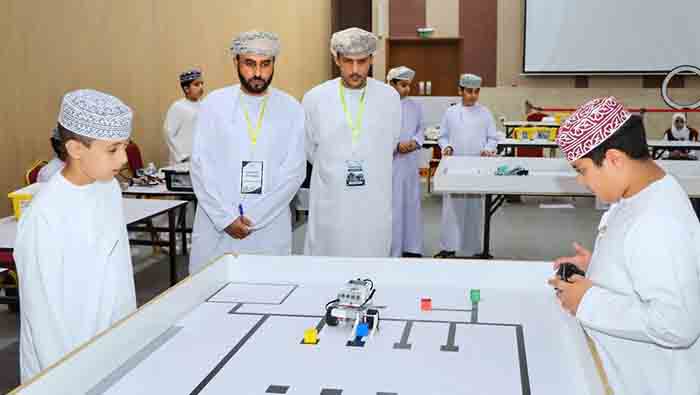
Liwa: The final qualifiers of the National Olympiad for Student Scientific Innovations, Robotics and Artificial Intelligence for the 2026/2027 academic year began on Tuesday at Liwa Centre for Science and Innovation. The event is organised by the Directorate General of Education in North Al Batinah Governorate, with the participation of more than 1,358 male and female students from schools across the governorate, competing in three main categories.
The number of teams participating in the student scientific innovations category reached 342, while 263 teams competed in the educational robotics category across its three tiers, alongside 74 teams in the unmanned aerial vehicles category. The final competitions among teams qualifying from the preliminary rounds will continue until 29 October.
The broad participation in the National Olympiad reflects the growing interest of students in North Al Batinah Governorate schools in scientific innovations, robotics and artificial intelligence. It also reflects the Directorate General of Education's commitment to providing an educational environment that fosters creativity, nurturing student talent and honing their skills, thereby contributing to preparing a generation equipped with future knowledge and skills, capable of competing and achieving accomplishments in scientific and innovation forums at national and international levels.
The competition aims to identify gifted students, nurture their creative abilities, develop their skills in science, technology, engineering and innovation, and enhance their capacity for scientific and creative thinking and problem-solving. It also encourages them to apply their scientific and technical knowledge in designing innovative projects and ideas that offer practical solutions to various challenges, contribute to community service, and keep pace with scientific and technological developments and future requirements.
The competition forms part of the Ministry of Education's efforts to strengthen the innovation environment in educational institutions and provide opportunities for students to apply their knowledge and skills in science and modern technologies. This fosters a spirit of research, experimentation, teamwork and positive competition, and develops their ability to transform creative ideas into scientific projects and applications capable of further development.