Saturday 25 / July / 2026
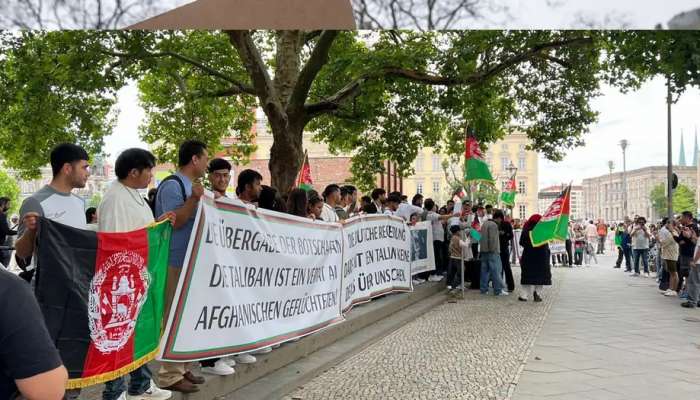
Berlin: The Taliban are sending more officials to staff its consulates in Germany, leaving many Afghans who fled the Taliban regime with a dilemma when trying to get passports and other documents. This is according to a statement released by the Association of Afghan Organisations in Germany (VAFO) in January.
"Without valid passports, they cannot secure their residence, extend their employment contracts, and in some cases cannot even complete basic administrative procedures," the statement read. "The de facto expectation that passport matters will be handled through Taliban structures fails to recognize the reality of those affected."
The German government is trying to step up deportations to Afghanistan, and it appears that the Taliban are using the opportunity to gradually gain diplomatic recognition in Europe.
The radical Islamist Taliban — designated a terrorist organization by several countries, including the United States though not by the European Union — retook control of Afghanistan in 2021 following the withdrawal of NATO troops.
So far, Russia is the only country to have recognized the Taliban regime as the legitimate Afghan government.
Many countries, however, maintain diplomatic ties with the Taliban, which have been condemned internationally for their harsh enforcement of Sharia law and countless human rights abuses.
German Interior Ministry officials travelled to Afghanistan in 2025 to discuss the practicalities of deportation, the result of which, according to the ministry, was that the Taliban had agreed in principle to take anyone proven to be an Afghan national.
Speaking in the Bundestag in mid-January this year, Interior Minister Alexander Dobrindt confirmed that deportations to Afghanistan had started in December, beginning with anyone with a criminal record.
This was a "dirty deal," according to Conrad Schetter, Afghanistan expert and director of the Bonn International Centre of Conflict Studies (BICC), because it amounted to the de facto recognition of Taliban officials as legitimate Afghan representatives in the consulates. The deal also allows Taliban officials access to all the data on Afghan citizens living in Germany — even though many of those people had fled because they were threatened by the regime, partly because they had helped the German military in Afghanistan.
This has left something of a "gray zone" in Afghanistan's embassy in Berlin and its two consulates in Bonn and Munich, Schetter said. Some offices are still run by representatives of the former NATO-backed government in Kabul, and others have been taken over by the Taliban, against whom NATO spent two decades fighting a war.
"It was done more or less in a very informal way," Schetter said. "Both sides aimed for it not to become too public — however, it became very public. It also means that the extreme human-rights-violating policy of the Taliban gets somehow accepted with this step."
Other European countries have not allowed the Taliban such easy access to the Afghan consulates, Schetter added.
"So far Germany here is a forerunner," he said. "I think all the other countries are waiting to see what Germany is doing, because Germany has by far the largest Afghan diaspora, and Germany is the leading country when it comes to the question of deporting Afghans."
The Foreign Ministry confirmed to DW that it had been accrediting new staff members sent from Afghanistan — much to the outrage of many of the staff appointed by the previous Afghan government.
In October last year, Hamid Nangialay Kabiri resigned in protest from his role as Acting Consul General at the Afghan consulate in Bonn when Taliban members were sent to the consulate and accredited by the German government.
"I told them I can't work with terrorists," he told DW. "That's why I resigned from my job. Now the consulate in Bonn belongs to the Taliban. I'm proudly Afghan, but the Taliban is not our government."
"It is deeply concerning that individuals appointed by a regime built on repression were allowed to assume control of an Afghan diplomatic mission on European soil," he wrote on X at the time.
Left without income and threatened with persecution if he returned to Afghanistan, Kabiri applied for asylum in Germany. Four months later, he is still waiting for a decision. He is unwilling to go to the Afghan consulate to apply for documents because of the information he would have to provide about his family.
"If the Taliban know where my mum and dad are living in Afghanistan, where my sister and brother are living, they can easily torture them," he said. "Everyone is scared of these political games."
A safer way for Afghans to stay?
Jeanette Höpping, a legal advisor at YAAR, a Berlin-based NGO that supports Afghan people in Germany, said that many of the people she tries to help are now scared to enter the consulates. YAAR and other civil society organizations say the German government must create a safer bureaucratic way for Afghan people to apply for ID documents and extend their passports.
Such an option has existed before. Following the regime change in Afghanistan in 2021, Höpping explained, Afghans in Germany had been allowed to apply for so-called "gray passports" — special passports for stateless people and other non-Germans for whom applying for passports from their home country was deemed too difficult.
But that recourse has now been closed to Afghan people, she said, and they must now show Afghan documents — either an Afghan passport or a taskira, an Afghan ID card — in order to apply for residency in Germany.
The push to deport more people, according to Thomas Ruttig, former co-director of the international Afghanistan Analysts Network, gave the Taliban the necessary leverage to change consulate staff.
Ruttig thinks Germany has been needlessly careless in allowing the Taliban to take over the consulates and doesn't believe the German Foreign Ministry was obliged to accredit whichever officials were sent from Kabul.
"In diplomacy and international law, there are always options," he told DW. "We see that in other countries. I think this whole move is motivated by one priority followed by the German government: Large-scale deportations to Afghanistan."
As for former diplomat Kabiri, he thinks the whole situation is absurd.
Why, he wonders, did the German government grant people asylum because they were being persecuted by the Taliban in the first place, only to then send those people back to the Taliban?
"Where is the logic?" he said.