Sunday 08 / February / 2026
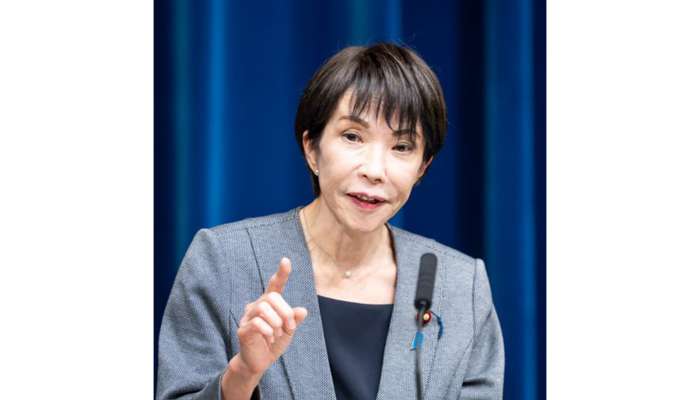
Tokyo: Rising living costs have emerged as the top concern for millions of Japanese voters ahead of Sunday's general election, as households struggle with stagnant wages and steadily increasing prices, Al Jazeera reported.
According to the report, the election pits the Prime Minister Sanae Takaichi-led Liberal Democratic Party (LDP) coalition against the opposition Centrist Reform Alliance, with inflation and affordability shaping voter sentiment nationwide.
Japanese households have found it increasingly difficult to make ends meet over the past year as wage growth continues to lag behind rising prices. Inflation-adjusted wages fell 2.8 per cent in November, marking the 11th consecutive month of decline, based on Japanese government data cited by Al Jazeera.
While overall inflation remains between 2 and 3 per cent, food prices have risen much faster. Rice prices surged nearly 68 per cent last year following shortages linked to a poor harvest in 2023. Imported food items such as coffee and chocolate have also become more expensive due to the weakening yen, which has reduced consumers' purchasing power.
A survey conducted by public broadcaster NHK last month found that 45 per cent of respondents considered measures to curb prices the most important factor in deciding their vote.
"Prices are going up without tangible increases in income, so people feel that even basic necessities are getting harder to afford," Koichi Nakano, associate professor of political science at Sophia University in Tokyo, told Al Jazeera. He added that higher taxes and social security contributions in Japan's ageing society are further straining household finances.
Prime Minister Takaichi, who is seeking to consolidate her mandate less than four months after becoming Japan's first female leader, has made cost-of-living issues a central theme of her campaign. She has promised to suspend Japan's 8 per cent consumption tax on food and non-alcoholic beverages for two years if re-elected.
The pledge follows Japan's largest stimulus package since the COVID-19 pandemic, a 21.3 trillion yen (USD 123 billion) programme approved last year that includes energy subsidies, cash handouts and food vouchers.
However, Takaichi's economic proposals have raised concerns over fiscal sustainability, particularly given Japan's rapidly ageing population and debt-to-GDP ratio of around 230 per cent, the highest among advanced economies, Al Jazeera reported.
Following the announcement of the proposed tax cut and the dissolution of parliament last month, foreign investors sold off Japanese government bonds, pushing yields to record highs.
With the election approaching, some voters remain undecided. "Honestly, I am tired of seeing new political groups with the same faces, just changing their party names," Al Jazeera quoted a voter as saying, reflecting broader frustration with Japan's political landscape.
Opinion polls indicate the ruling coalition is poised for a decisive victory, according to Kyodo News.
Addressing supporters in Tokyo during the final day of the 12-day campaign, Takaichi, who became Japan's first woman PM in October, said that years of excessive fiscal austerity and inadequate future-oriented investment had weakened the country's growth potential.
"Japan still has enough room to grow because we have strong technology," Takaichi said, as quoted by Kyodo News, pledging large-scale tax incentives for capital expenditure to stimulate domestic investment.
Takaichi has previously described a weak yen as a "major opportunity" for export-oriented industries.
Her comments, interpreted as support for the yen's depreciation, have drawn criticism amid rising living costs driven by higher import prices, Kyodo News reported.
According to polls, the LDP is projected to win over 233 seats in the 465-member lower house, up from its previous tally of 198, which would be sufficient to secure a majority.
In contrast, the Centrist Reform Alliance -- formed last month through the merger of the Constitutional Democratic Party of Japan and Komeito -- is expected to suffer significant losses relative to its pre-election strength of 167 seats, Kyodo News reported.
The current LDP-JIP coalition was formed in October after Komeito ended its 26-year alliance with the LDP.
Prior to the dissolution of the lower house late last month, the government had been surviving on a narrow majority, supported by independent lawmakers.
Opposition leader Yoshihiko Noda criticised Takaichi's decision to call an election just 16 days after dissolving the lower house -- the shortest interval in Japan's postwar history -- calling it "a disrespect to democracy" that could discourage voter participation, Kyodo News reported.