Monday 21 / September / 2026
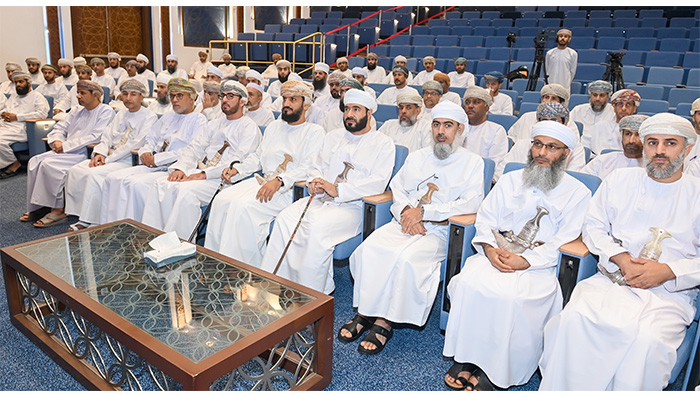
Muscat: The Ministry of Endowments and Religious Affairs on Sunday, during its media briefing in Muscat, reviewed its achievements for 2025 and its targets for the current year 2026, focusing on key pillars, namely the sustainable development, enhancing community partnership, investing religious resources, and consolidating the values of moderation and citizenship.
Dr. Mohammed Said Al Maamari, Minister of Endowments and Religious Affairs, affirmed that the Ministry adopted ten performance indicators for 2025 and managed to exceed most of its targets, reflecting the growing level of trust between the institution and society and confirming the effectiveness of implemented programmes and initiatives.
He pointed out that the Ministry's general directives are based on four main pillars, namely contributing to the achievement of sustainable development goals, building trust and effective community partnership, investing religious resources, and promoting the values of moderation, tolerance, and good citizenship.
He pointed out that the target growth rate for beneficiaries of religious activities and fatwa services was 5%, equivalent to (2,083,725) beneficiaries; however, the actual achievement in 2025 exceeded ten million beneficiaries from these diverse programmes and religious activities.
The minister noted that the target growth rate for beneficiaries of programmes promoting tolerance, coexistence, and common human values internationally was 2%, and the target was 100% achieved with (12,400) people benefiting globally. The growth rate for beneficiaries of national identity enhancement programmes locally also increased by 5%, with a target of (11,576) achieved 100%, the minister explained.
He added that the target growth rate for returns from endowments assets, Public Treasury (Bayt Al Mal), and funds of orphans and minors increased by 5%. The Ministry achieved 130% of the target, amounting to OMR8,556,799, excluding returns from endowments managed by endowments agents.
He explained that the target growth rate for new assets annually increased by 7%, equivalent to OMR1,190,910. However, the actual achievement in 2025 was registering 168 endowments assets valued at OMR53 million, surpassing the planned figure, reflecting community confidence in the Omani endowments system.
He indicated that the target growth rate for Zakat revenues annually increased by 3%, with an estimated target of OMR8,614,920. However, the actual achievement reached OMR15,785,119, a growth rate of 183% of the target, confirming the growing awareness of the importance of this obligation and confidence in the Zakat system in the Sultanate of Oman.
The minister touched upon the indicator for the growth rate of Quran learners, which targeted an increase of 7%, aiming for 20,556 beneficiaries, while the actual achievement reached 298,643 learners.
He added that the indicator for the growth rate of the number of congregational mosques, neighbourhood mosques, and Quran schools covering their basic service expenses increased by 15% annually. The target was 100% achieved with a total of 2,741 congregational and neighbourhood mosques. Additionally, 167 new endowment assets were registered with an estimated value exceeding OMR50 million.
He affirmed that these achievements are based on trust and credibility between the government and society, which positively reflected on the performance evaluation of government institutions issued by the Government Institutions Performance Measurement Unit.
He discussed the most prominent achievements realized during the past year, affirming that what has been accomplished reflects the integration of vision between investing religious resources, enhancing community partnership, and consolidating the principles of governance and proficiency.
He explained that community partnership with an endowment dimension contributed to the construction and maintenance of mosques and Quran schools through the implementation of 339 projects, at a total cost of OMR32,307,476.
The minister pointed to the management of the investment portfolio for orphans' and minors' funds, valued at over OMR123 million, achieving an investment return of 5.15%, reflecting the efficiency of investment management and the Ministry's keenness to develop assets while maintaining their sustainability.
He explained that innovation in endowment projects constituted a pillar for qualitative transformation through the launch of the "Eshraq" endowment fund and the "Ghiras" endowment fund, along with investments in the space sector by launching the two satellites "Aman 1" and "Aman 2". This, the minister said, resulted in signing an agreement worth $9 million US dollars between Omantel and OQ, in addition to technological investments in Arabic language software and endowment projects, including the endowments of Harat Al-Aqr in the Wilayat of Nizwa, which contributed to raising the real estate value of properties in the neighborhood by nearly 100 times.
He added that during 2025, the Ministry signed contracts for new investment projects in 16 endowment assets, with amounts nearing OMR6 million.
In the field of Zakat work, he clarified that the Ministry sponsored 31,642 families through 66 private Zakat committees, involving more than 2,550 members and volunteers, with total amounts estimated at around OMR16 million during 2025.
Regarding Hajj services, the minister pointed to an increase in the percentage of beneficiaries from the Hajj entitlement service to 92% of total applicants, with more than 110,000 pilgrims benefiting since the adoption of the electronic system. The satisfaction rate for Hajj services reached 96.9%, and the satisfaction rate for registration services was 98.6%, with the total number of applications submitted since the 1437 AH season surpassing 300,000.
He pointed out that as many as 2,520 religious activities for young people were launched during the summer of 2025, benefiting 126,000 male and female students. He explained that the Ministry dedicated previous years to achieving qualitative targets: 2023 was the Year of Endowments, 2024 the Year of the Mosque, and 2025 the Year of the Employee, while 2026 has been designated the Year of Proficiency.
He affirmed the continuation of work on governance projects and legislative development through contracting with specialized companies to approve comprehensive governance guides for endowments, congregational and neighbourhood mosques, religious activities, Quran schools, and the work of endowments agents, in addition to working on the governance of Zakat institutions.
He further added that the Ministry targets a 5% growth in the number of beneficiaries of religious activities and fatwa services, a 2% growth in programmes promoting tolerance internationally, and 5% growth in programmes enhancing national identity locally.
On the investment side, the minister noted that the Ministry targets a 5% growth in returns from endowment assets, Public Treasury, and funds of orphans and minors, an 8% growth in new endowment assets, and a 3% increase in Zakat revenues. It also seeks to increase the number of Quran learners by 8% and raise the percentage of congregational mosques, neighborhood mosques, and Quran schools covering their basic service expenses by 15% annually, he added.
The Minister of Endowments and Religious Affairs affirmed that these targets and programmes are implemented according to an integrated governance system ensuring realism and transparency and enhancing trust between the state and society, thereby contributing to consolidating the religious and Waqf role in serving comprehensive development and building the Omani citizen.
Regarding Hajj convoys and transport, Ahmed Salim Al Rashdi, Undersecretary of the Ministry of Endowments and Religious Affairs, explained that the recent decision by the Kingdom of Saudi Arabia to prevent Omani buses from entering its territories has caused concern among some bus owners. The Ministry is working in coordination with the Ministry of Hajj and Umrah in Saudi Arabia to find practical solutions to this challenge, he affirmed.
He added that among the proposed solutions are: Omani buses will be allowed to enter the Kingdom up to points before Makkah Al-Mukarramah and Al-Madinah Al-Munawwarah, after which pilgrims will be transported within these cities by dedicated means of transport. Coordination is underway between the two sides to determine additional details regarding bus parking locations and coordination among relevant parties. He pointed out that the Ministry continuously works with authorities in the Kingdom of Saudi Arabia to remove any obstacles that might hinder the transport of pilgrims, while taking into account the necessary of ensuring their comfort and safety and smooth procedures according to the new regulations.
The media briefing of the Ministry of Endowments and Religious Affairs featured a discussion session with the participation of several Directors General from the Ministry, where the latest developments in endowment projects and measures taken to achieve future goals were reviewed.
The session also touched upon the achievements made by the Ministry in 2025, including the growth of endowment and Zakat revenues, the increase in the number of beneficiaries of religious and educational activities, and affirming the efforts made in enhancing community partnership, developing endowment governance, and achieving sustainability in religious resources.