Sunday 19 / April / 2026
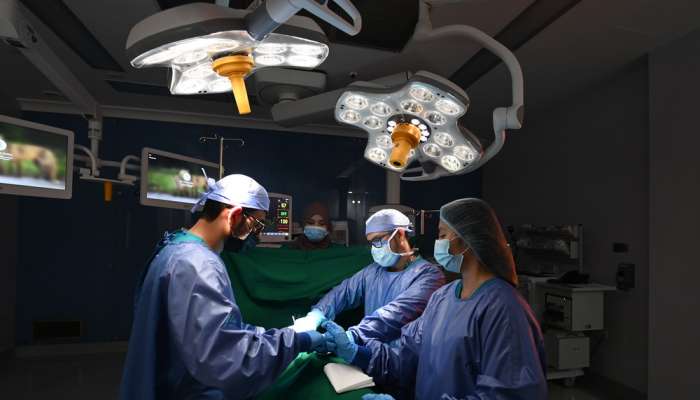
Muscat: The health priority under Oman Vision 2040 has witnessed qualitative transformations reflecting the scale of efforts exerted during the Tenth Five-Year Development Plan.
As a result, the indicator of healthy life expectancy has recorded a qualitative leap, reaching 66.07 years in 2023, surpassing the global average.
This progress has been accompanied by a tangible rise in the community satisfaction indicator, which reached 82.4 percent, demonstrating the success of investment in national cadres and the development of care skills.
Construction achievements have been coupled with legislative and technological updates to shape the contours of a pioneering, sustainable, and inclusive health system, placing human beings at the core and as the primary objective of development.
Pursuant to Royal decree No. 10/2024, the sector has undergone a comprehensive reformulation of its governance framework, culminating in a flexible organisational structure based on three specialised units that ensure enhanced decentralisation and grant governorates broader powers.
As a strategic step to unify care delivery efforts under a single umbrella, the foundations of medical integration have been laid through the establishment of the University Medical City and the Medical City for Military and Security Services, as well as the transfer of medical services from the Diwan of Royal Court to the Ministry of Health.
This ensures alignment of strategic directions, expenditure efficiency, and the unification of national care standards.
In the healthcare delivery sector, four major hospitals have been opened and become operational, namely Al Suwaiq, Khasab, Al Mazyounah, and Wadi Bani Khalid.
Concurrently, strategic expansions have been undertaken at Sohar, Nizwa, and Sur hospitals, as well as the National Heart Centre.
Primary care has also been strengthened through the establishment of two health complexes and seven new health centres, alongside the upgrading of nine local hospitals.
Specialised services of high impact have been launched, including an IVF centre, the National Centre for Virtual Health, nine dialysis units, seven accident and emergency units, and the Central Public Health Laboratory.
Additionally, work is currently underway on the construction of 21 additional health facilities, with completion rates having reached advanced stages.
Notable among these are Sultan Qaboos Hospital in Salalah, with a completion rate of 83 percent, and Samail Hospital, with a completion rate of 71 percent.
In keeping pace with the technological revolution, the Ministry of Health has achieved a qualitative leap by integrating artificial intelligence into diagnostic services.
The National Programme for Diabetic Retinopathy Screening has successfully screened over 30,000 patients with an accuracy rate of 92 percent, reducing waiting times by more than 80 percent.
Pioneering projects have also been launched, including the Omani Genome Programme, which represents the cornerstone of personalised medicine, and the Unified Health Record, which connects 255 facilities, thereby cementing the Sultanate of Oman's position as a regional hub for digital health innovation.
To achieve self-sufficiency, the number of operational medical factories has risen to 21, with an additional 18 projects under implementation.
This trajectory was crowned by the signing of six advance purchase agreements with leading national factories to localise the production of biopharmaceuticals, intravenous solutions, and genetic disease medications, thereby enhancing pharmaceutical sustainability and underscoring the sector's appeal for quality investment.
These efforts have positively impacted international indicators, with Oman advancing to 55th place globally in the Legatum Prosperity Index.
The upcoming phase necessitates the continued enhancement of system efficiency and the adoption of modern technologies to keep pace with population growth, while committing to the development and sustainability of national cadres and capabilities.
This is essential to ensure a world-class, pioneering health system that safeguards community health, achieves quality of life, and attains the targets of Oman Vision 2040.