Saturday 19 / September / 2026
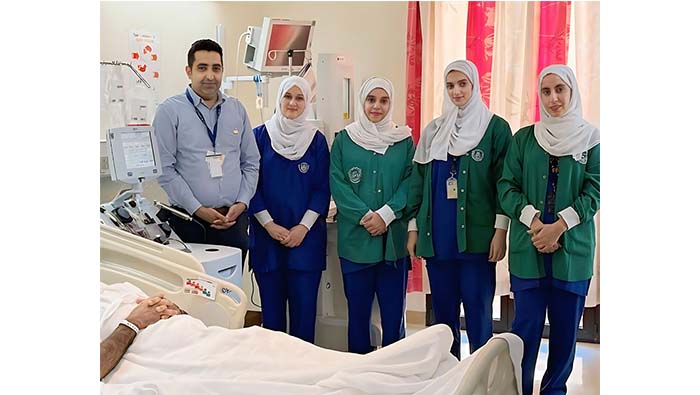
Muscat: Acting in cooperation with the College of Medicine and Health Sciences at Sultan Qaboos University (SQU), the National Hematology and Bone Marrow Transplant Center at the University Medical City (UMC) on Tuesday performed the first therapy with CAR-T cells that were fully assembled and engineered within national laboratories in the Sultanate of Oman.
The therapy was a major medical accomplishment that reflects the rapid development in hematology and cancer treatment services in Oman.
CAR-T cells therapy emerges as one of the latest advanced treatments for blood cancers. It involves modifying the patients' own immune T-cells genetically to enable the cells to recognise and precisely target cancer cells. Preparation for this type of therapy begins by collecting immune cells from a patient’s blood using apheresis, then modifying the cells in specialised laboratories before reinjecting them back into the patient's body.
Dr. Ibrahim bin Mohammed Al Nabhani, Assistant Professor at the College of Medicine and Health Sciences at the SQU and Consultant Hematologist at the National Hematology and Bone Marrow Transplant Center, UMC, said, “This achievement represents an important milestone in the development of advanced cells therapy programmes in the Sultanate of Oman. The successful implementation of the first treatment with locally collected T-cells reflects the advanced status attained by the medical system on both material and human levels, in terms of readiness of infrastructure and growth of national expertise in the field of hematology and stem cells transplantation.”
Dr. Ibrahim added that the success of the therapy opens up broader prospects for expanding the application of such advanced technologies within Oman and enabling patients to benefit from the treatments in accordance with professional medical practices and global standards.
He pointed out that the implementation of this type of treatment requires careful coordination between multidisciplinary teams, including hematologists and specialists in stem cell laboratory units, apheresis unit and clinical pharmacy, in addition to specialised nursing teams.
Dr. Khalil bin Saleh Al Farsi, Head of the National Hematology and Bone Marrow Transplant Center at the UMC, pointed out that the success of the first cases constitutes a landmark in localising advanced treatments in the Sultanate of Oman.
“The achievement affirms the efficiency of national cadres in adopting the most advanced treatment technologies and represents a step forward in developing an integrated T-cells therapy programme at the National Hematology and Bone Marrow Transplant Centre, Dr. Khalil observed.
He added that introducing this type of treatment would provide modern treatment options for patients within Oman, spare them the need to travel abroad for treatment and consolidate Oman’s status as an advanced regional hub for therapies in the field of blood diseases.
The achievement was part of the UMC’s ongoing efforts to enhance partnerships with national institutions, localise the latest treatment technologies, empower national talents in the use of advanced treatment technologies and contribute to improving the quality of healthcare in Oman.