Wednesday 13 / May / 2026
Moscow: The Russian Foreign Ministry said on Tuesday that Foreign Minister Sergey Lavrov and External Affairs Minister S Jaishankar are set to hold wide-ranging talks on Wednesday, including priority areas of India-Russia cooperation.
According to the Russian Foreign Ministry, the ministers will focus on discussing the progress in implementing the agreements reached during President Vladimir Putin's official visit to India in December 2025, as well as preparations for the leaders' upcoming talks in Russia and the next meeting of the Intergovernmental Russian-Indian Commission on Trade, Economic, Scientific, Technological, and Cultural Cooperation.
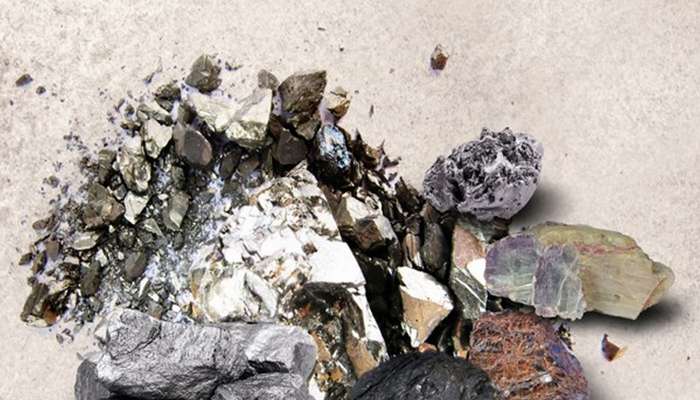
India and Russia are seeking to sign a preliminary agreement on the exploration, processing and technological cooperation of critical minerals including lithium and rare earth metals, citing two sources familiar with the matter.
The agreement could be signed within the next few months, Reuters' sources said, as India steps up efforts to secure overseas supplies of minerals critical for clean energy technologies and industrial production while reducing its dependence on China.
"We have shared a draft of the proposed agreement with our Russian counterparts," one of the sources said.
One of the sources said India could also revisit a lithium exploration project in Mali operated by Russia’s state nuclear corporation Rosatom if the political and security situation in the West African country stabilizes. India had previously withdrawn from the project over security concerns.
The planned cooperation comes as countries worldwide race to secure access to critical minerals used in electric vehicle batteries, renewable energy infrastructure and advanced manufacturing.
China currently dominates the global supply chain for many rare earths and other strategic minerals, prompting governments including India’s to diversify sources and build domestic processing capacity.
news
As Kremlin Boasts of Arctic Riches, Indigenous Peoples Struggle to Survive
Read more
Russia, meanwhile, has been trying to expand its own rare earths industry despite heavy reliance on imports and limited domestic extraction capacity.
In November last year, President Vladimir Putin ordered the government to prepare a roadmap for developing the country’s rare earth metals industry by Dec. 1. The government was instructed to approve a long-term development roadmap within a month.
According to Russia’s Natural Resources Ministry, the country holds an estimated 28.5 million metric tons of rare earth metals and more than 650 million metric tons of rare metals. However, production remains minimal and nearly all domestic demand is met through imports.
Russia consumes about 3,000 metric tons of rare earth metals annually but produces only around 50 metric tons, with imports accounting for more than 98% of supply, ministry data show.
The Industry and Trade Ministry says imports meet 57% of Russia’s tungsten demand, 51% of molybdenum demand, 61% of zirconium demand, more than 90% of niobium demand, more than 60% of tantalum demand and all of its lithium demand.
Russia accounts for roughly 1% of global rare earth production. Lacking domestic extraction and processing technologies, Russian authorities have also sought to attract Chinese expertise in the sector.
India has in recent years intensified efforts to reduce dependence on China, which dominates global markets for several critical minerals and possesses advanced mining and processing technologies.
In 2023, New Delhi designated more than 20 minerals as critical for the energy transition and growing industrial demand.
India has also prepared a 25 billion rupee ($261 million) incentive program for private companies producing rare earth magnets, Bloomberg previously reported.