Tuesday 23 / June / 2026
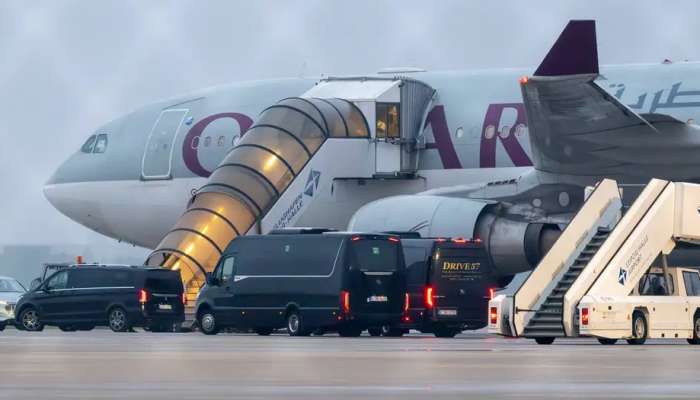
Brussels: The European Union was set to host Taliban officials in Brussels on Tuesday after Belgium granted them one-day visas for talks on returning failed Afghan asylum-seekers.
The discussions could advance European efforts to deport Afghans who have no legal right to remain as governments seek a tougher approach to irregular migration.
Why are the Taliban in Brussels?
European governments have increasingly pushed for stricter migration policies as the issue has gained political prominence across the continent.
According to EU data, member states received about 1 million asylum applications from Afghans between 2013 and 2024, with roughly half approved.
Around 20 EU countries signaled interest last year in returning some Afghans without a right to stay, particularly those convicted of serious crimes or considered security threats.
Belgium, acting as host country for the EU institutions, approved five visas on Monday following a "security assessment," a spokeswoman for the country's Foreign Ministry said.
The visas are valid only for Belgium and for one day. Multiple sources and Afghan media reports indicated the talks were expected to take place on Tuesday.
The European Commission invited the delegation despite not formally recognizing the Taliban administration, which returned to power in Afghanistan in 2021.
European governments closed their embassies in Kabul when the Taliban authorities swept back to power in 2021, reimposing their strict vision of Islamic law.
What has been the reaction to the planned Taliban visit?
The outreach has drawn criticism from rights groups. They argue that cooperation on returns risks undermining the EU's criticism of Taliban policies, particularly restrictions on women and girls.
"EU countries are undermining their credibility by condemning Taliban abuses and pursuing accountability on one hand, while cooperating with the Taliban to forcibly return Afghans on the other," said Fereshta Abbasi of Human Rights Watch.
Rights groups and humanitarian organisations have also questioned whether returns are legal or ethical, given Afghanistan's humanitarian crisis, with millions facing hunger and economic hardship, according to the United Nations.
"The Taliban visit to Brussels signals a phenomenon that is unsurprising but still highly problematic: a 'creeping normalisation' that is driven by domestic political pressures in the EU and an inability by the international community to hold the Taliban accountable," Helena Hahn, a migration policy expert at the European Policy Centre, told DW.
"The problem is that the situation is intractable in many ways: European governments should be able to return people who have committed serious crimes - this could help restoring credibility in the current system - while at the same time, the human rights and economic situation in Afghanistan does not provide ground for return and reintegration. This raises serious questions around respect for international law," she added.
What has the EU said about the Taliban visit?
The European Union's migration chief, Magnus Brunner, defended the engagement with the Taliban earlier this month. He said Brussels had no other option than to engage with the Taliban regime on the return of irregular migrants.
"It is important to talk to them at least to improve the situation for Europeans, but also for asylum applicants, for asylum-seekers," he said.
On Tuesday, Markus Lammert, an EU Commission spokesperson, told reporters that contact with the Taliban had been ongoing "for a while."
"A first meeting took place in Afghanistan in January. Following that, the Commission has been preparing for a meeting also here in Brussels," he said.
Lammert said the Commission was acting in response to a 2025 letter from 20 EU member states in which they asked the bloc to "coordinate technical contacts on returns," with a focus on people who have "committed serious crimes or who pose security threats."
"With this, we pursue a comprehensive and a coordinated approach," Lammert added.
Germany is among the countries seeking to significantly expand deportations to Afghanistan, stepping up charter flights to Kabul. Officials aim to establish a near-weekly "deportation air bridge," targeting serious offenders and individuals deemed security threats currently in custody.