Sunday 11 / October / 2026
Muscat: In a landmark achievement for Oman's healthcare sector, the Sultanate successfully carried out a comprehensive organ donation and transplantation operation that saved the lives of four patients through the transplantation of a heart, liver, and two kidneys from a single donor who had been declared brain dead.
The operation was conducted through close cooperation between Royal Hospital, Khoula Hospital, and the Omani Center for Organ and Tissue Donation and Transplantation, demonstrating the high level of coordination, expertise, and readiness achieved by Oman's national healthcare system.
The journey began at Khoula Hospital, where a patient was diagnosed with brain death in accordance with internationally recognized medical protocols. Following confirmation of the diagnosis, specialized medical teams, working in coordination with the Omani Center for Organ and Tissue Donation and Transplantation, initiated comprehensive assessments and completed all required medical, legal, ethical, and religious procedures.
A pivotal moment in the process came when the donor's family agreed to donate their loved one's organs, making a humanitarian decision that ultimately gave four critically ill patients a new chance at life. Medical specialists then conducted extensive clinical, laboratory, and immunological evaluations to determine organ suitability and identify the most appropriate recipients from national transplant waiting lists.
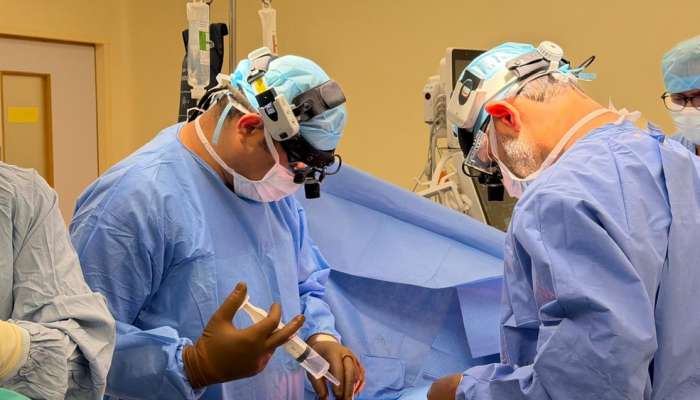
Due to the specialised equipment and advanced capabilities required for heart transplantation, the donor was transferred to the Royal Hospital. There, multidisciplinary teams performed organ retrieval and transplantation procedures under a tightly coordinated system designed to preserve organ viability and minimise the time between retrieval and transplantation.
The operation brought together a wide range of Omani specialists, including transplant surgeons, cardiac surgeons, liver and urological surgeons, anesthesiologists, intensive care physicians, hepatologists, emergency medicine specialists, laboratory and blood bank physicians, immunologists, histopathologists, radiologists, nursing teams, operating room technicians, transplant coordinators, ambulance personnel, and supporting administrative and technical staff.
The heart, liver, and kidneys were successfully transplanted into four patients suffering from advanced organ failure. All recipients responded well to treatment, completed rehabilitation programs, and were subsequently discharged from the hospital to continue follow-up care under specialized medical supervision.
According to Dr Noreen Yousef al Balushi, Director of the Omani Centre for Organ and Tissue Donation and Transplantation, the operation represents a model of effective integration among Oman's healthcare institutions. She said the center oversaw all stages of the process according to approved regulatory frameworks and international best practices, ensuring compliance with medical, legal, ethical, and logistical requirements.
She emphasised that the success reflects the maturity of Oman's organ donation and transplantation system and demonstrates the importance of teamwork and institutional cooperation. Dr. Al-Balushi noted that organ donation after brain death carries a profound humanitarian message, enabling individuals to continue making a positive impact even after death by saving the lives of others.
She added that such successes strengthen public confidence in organ donation programs and encourage more people to register as donors. Looking ahead, she said the center aims to build a comprehensive and sustainable national transplantation system by expanding transplant programs to include additional organs and tissues, developing specialized national expertise, upgrading infrastructure, and strengthening local, regional, and international partnerships.
"Our vision is for Oman to become a leading regional model in organ and tissue transplantation, not only in terms of medical excellence but also in promoting a culture of humanitarian giving and social responsibility," she said.
Dr. Al-Warith bin Ahmed Al-Hashimi, Consultant of Liver and Pancreas Surgery and Transplantation and Head of the Organ Transplantation Department at the Royal Hospital, described the operation as a major milestone in the development of Oman's organ donation and transplantation program. He said the successful use of one donor's organs to save four lives highlights the immense humanitarian and medical value of organ donation.
He explained that once brain death was confirmed, multiple specialized teams worked simultaneously to coordinate every stage of the process, from organ assessment and recipient selection to transplantation and post-operative care. One of the greatest challenges, he noted, is time, as each organ must be removed, transported, and transplanted within a limited period to ensure viability and maximize success rates.
Despite these challenges, Oman's medical teams successfully completed the operation through experience, continuous training, teamwork, and adherence to established protocols.
Dr. Al-Hashimi also expressed gratitude to the donor's family for their compassionate decision, emphasizing that one donor can save several lives and transform the futures of entire families. He called on the public to learn more about organ donation after death, describing it as one of the highest forms of humanitarian giving and a powerful expression of solidarity and compassion.
The Royal Hospital, Khoula Hospital, and the Omani Center for Organ and Tissue Donation and Transplantation jointly praised the donor's family for their generosity, noting that their decision not only saved four lives but also strengthened the culture of organ donation as a lasting legacy of hope and life.
The achievement further underscores Oman's progress in advanced transplant medicine. Notably, the operation included the third successful heart transplant performed in the Sultanate, highlighting the growing capabilities of national medical teams and the country's commitment to expanding life-saving organ transplantation services.
Health authorities reaffirmed their commitment to enhancing public awareness of organ donation and further developing transplantation programs to provide hope and improved quality of life for patients awaiting critical organ transplants across Oman.