Sunday 30 / August / 2026
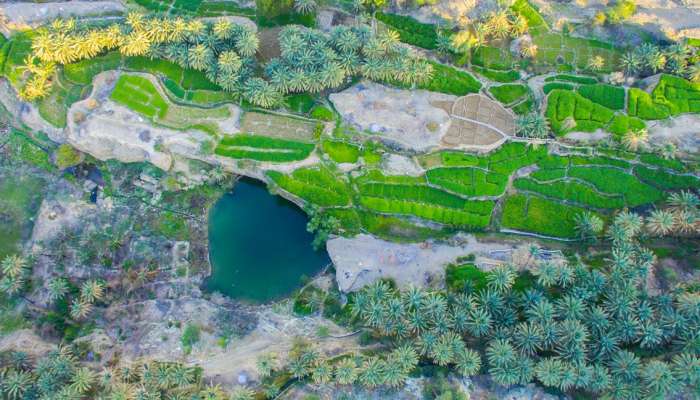
Rustaq: The Wilayat of Rustaq in South Al Batinah Governorate is continuing to strengthen its position as one of Oman’s prominent historical, tourism and development destinations, benefiting from its status as the administrative centre of the governorate and its combination of rich heritage, mountainous landscapes, springs, valleys and agricultural areas, alongside a growing network of infrastructure and service projects.
The development drive is aimed at improving infrastructure, raising quality of life, enhancing tourism services and supporting economic activity, while making greater use of Rustaq’s historical and natural assets.
Dr. Yahya bin Sulaiman Al-Nadabi, wali of Rustaq, said the wilayat is moving steadily to strengthen its development and service infrastructure and make better use of its historical, tourism and natural potential.
He noted that projects involving roads, public facilities, services and the development of tourist sites reflect the government’s interest in creating an integrated environment that serves residents and visitors while supporting economic activity.
He said Rustaq’s diverse assets provide an important foundation for developing the tourism sector. The combination of historical sites with springs, valleys, mountain villages and natural trails creates broad opportunities to diversify tourism products and increase the economic returns generated by these resources.
He stressed the importance of continuing to develop tourist sites and improve related services in a manner that reflects the status and distinctive assets of the wilayat.
Rich historical and natural heritage
Rustaq is home to some of Oman’s most prominent historical landmarks, particularly Rustaq Castle and Al Hazm Fort, which represent important elements of the Sultanate’s historical and cultural heritage.
The wilayat also contains several natural and water attractions, including Ain Al Kasfa, Ain Al Huwait and Al Khaba Al Zarqa, in addition to Falaj Al Maysar, which reflects Oman’s longstanding agricultural heritage and traditional irrigation systems.
Rustaq’s natural landscape extends across a number of valleys and sites, including Wadi Bani Ghafir, Wadi Al Hawqain, Wadi Al Sahtan, Wadi Bani Awf, Wadi Al Sin, Wadi Al Haymali and Wadi Bani Hani.
The Al Hawqain waterfalls are among the wilayat’s notable natural attractions, while mountain villages such as Balad Seet, Jammah in Wadi Al Sahtan and Al Khadha offer distinctive architectural and environmental characteristics that provide opportunities for tourism experiences centred on nature, exploration and local heritage.
These attractions form part of Rustaq’s broader tourism potential, with its historical landmarks, hot springs, wadis and mountain communities located within a relatively interconnected geographical area.
Health and education services
Rustaq has a network of 10 health institutions distributed across different areas and villages, helping bring healthcare services closer to population centres.
The health system includes Rustaq Hospital, Wadi Al Haymali Hospital, Wadi Bani Ghafir Hospital and Rustaq Health Complex, in addition to six health centres: Rustaq Health Center, Al Hawqain Health Centre, Al Razi Health Center, Wadi Al Sahtan Health Center, Balad Seet Health Centre and Wadi Bani Awf Health Centre.
The distribution of these facilities supports residents across the wilayat's diverse geographical environment, which includes urban, mountain and rural communities.
In education, Rustaq has 50 government schools distributed across its different areas and villages, providing education at various levels and supporting communities across the wilayat.
Major infrastructure projects underway
Rustaq is currently witnessing several service and development projects designed to improve infrastructure, increase road efficiency, enhance public facilities, improve the urban landscape and develop tourism destinations.
Among the key projects is the internal roads design and paving project, which covers a planned 40 kilometres of roads. Around 33 kilometres have been completed, bringing the project's completion rate to 80 percent.
Work on box culverts is also progressing at several locations. Works have been completed at Samia and Al Falaj Al Hadith, while box-culvert works at Al Hawqain have also been completed. Overall, the project has reached approximately 90 percent completion.
Rustaq City Walk
The Rustaq City Walk project is among the most prominent urban development initiatives underway in the wilayat.
The project is intended to create a destination combining social, recreational, service and commercial activities, while improving the quality of life for residents and providing visitors with a new urban attraction.
The project has reached 50 percent completion and is expected to contribute significantly to Rustaq’s urban landscape once completed.
The City Walk project is part of a wider effort to create integrated destinations that can support tourism and local economic activity. Earlier reporting on the project described plans for a mix of commercial, recreational, hospitality and public spaces, including landscaped areas and gathering spaces.
Improving entrances and public spaces
Work on the Aqaba Al-Rustaq Gate development project has reached 60 percent completion.
The project forms part of efforts to improve the entrances to the wilayat and enhance locations of visual and geographical importance, while presenting a stronger identity for Rustaq and improving the experience of visitors arriving in the area. The project was launched as part of broader efforts to upgrade the Rustaq entrance and provide facilities for visitors.
Construction is also continuing on parks in the middle of residential neighbourhoods at Al Hawqain, Amq and Jammah, with the project currently 60 percent complete.
The neighbourhood parks are intended to provide additional recreational and community spaces for residents while contributing to the improvement of the urban environment.
Development of Ain Al Kasfa
Development work has begun on the third phase of the Ain Al Kasfa project, one of Rustaq’s best-known natural and tourism attractions.
The latest phase is aimed at continuing efforts to improve the site and enhance its role as a visitor destination.
Ain Al Kasfa is among Rustaq’s notable natural attractions, with its warm springs forming an important part of the wilayat's tourism identity.
Road rehabilitation
In the transport sector, the Ministry of Transport, Communications and Information Technology is implementing a project to rehabilitate the existing road connecting Al Hazm village and Al Washil village.
The road stretches for approximately 11 kilometres.
The project is intended to improve road efficiency, strengthen safety and traffic flow, facilitate movement between villages and connected areas, and support population and economic activity.
Recently completed projects
Rustaq has also completed several projects during the recent period.
These include the development of the Al Hazm entrance, repairs to damage caused by weather conditions, maintenance of the Rustaq vegetable and fruit market, installation of internal lighting poles at Rustaq Public Park, and the installation of lighting poles at several other locations across the wilayat.
Together, these projects contribute to improving public infrastructure and the visual and functional quality of Rustaq’s urban areas.
Tourism offers major investment opportunities
Tourism remains one of the sectors with significant potential for further development in Rustaq.
The wilayat’s combination of historical, natural, water and mountain attractions creates opportunities for integrated tourism programmes that could bring together visits to castles and forts, springs and valleys, mountain trails and heritage villages.
The diverse assets also provide opportunities for the private sector to develop a range of tourism-related projects and services, including hospitality facilities, restaurants, cafés, recreational activities, adventure tourism and mountain excursions.
Such investments could increase the economic value generated by tourist sites while creating opportunities for small and medium enterprises and local business owners.
The wali said Rustaq possesses the components necessary to become an integrated tourism destination.
He stressed that investing in historical and natural sites, alongside developing infrastructure and tourism services, represents an important means of maximising the benefits of the wilayat’s comparative advantages.
Government, private sector and community cooperation
Al-Nadabi said the next stage will require greater integration between government institutions, the private sector and the local community.
Such cooperation, he explained, will be important to ensuring the sustainability of development projects and maximizing their economic and social impact.
He also emphasized the role of Rustaq’s residents as partners in the development process and in benefiting from the opportunities created by new projects and the wilayat’s local resources.
A destination combining heritage and modern development
Concluding his remarks, Al-Nadabi highlighted Rustaq’s distinctive ability to combine history, nature, public services and modern development.
He said Rustaq Castle and Al Hazm Fort, its springs and aflaj, valleys, mountain villages and tourism routes should not be viewed as isolated attractions. Rather, they constitute an interconnected system that can serve as the foundation for a more diverse tourism and economic experience.
The development of this integrated system could strengthen Rustaq’s presence on the map of domestic tourism and local investment, while creating new opportunities for businesses and communities and supporting the wilayat’s wider development objectives.