Tuesday 22 / September / 2026
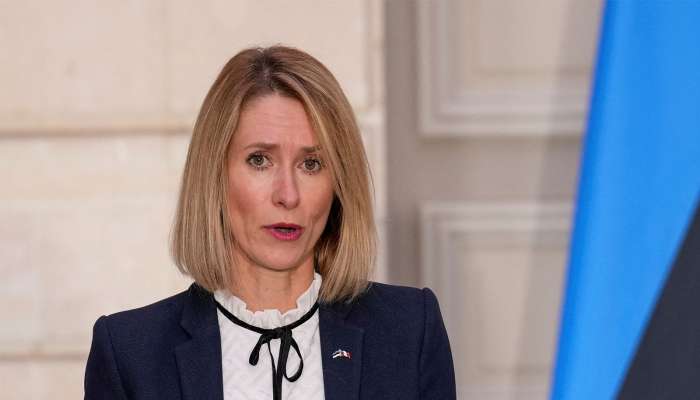
Wicklow: European Union foreign policy chief Kaja Kallas urged nations possessing air defence interceptors nearing their expiry date to donate them to Ukraine, emphasising that the country lacks the necessary hardware to safeguard civilians as it faces a brutal war with Russia.
Addressing an informal gathering of EU defence ministers upon her arrival in Wicklow, Ireland, Kallas stated, "The main issue is air defence. They are lacking interceptors."
Further, she said, "We know that some of the countries have interceptors that will expire soon. So, it would be very good if those would be given to Ukraine so that they can use them to protect their people".
Highlighting the urgency of these supplies, Kallas noted that July and August marked the deadliest periods for civilians, stating that "Russia is really escalating to hurt the people of Ukraine as much as possible to break them".
An overnight Russian air offensive targeted Ukraine's capital, Kyiv, and its surrounding areas, killing at least 12 people, including an Indian national, and injuring over a dozen others.
Ukrainian President Volodymyr Zelensky took to his social media to state, "Overall, 12 people were killed, among them an Indian citizen, and dozens more were injured in the attack." He also offered his condolences to those who lost their loved ones.
This major aerial assault on the broader Kyiv region marked the sixth successive day of attacks on the Ukrainian capital that came at a time when Russian President Vladimir Putin was in Bishkek, Kyrgyzstan, for the 26th Shanghai Cooperation Organisation (SCO) Summit, where he met with Prime Minister Modi to address regional and global matters.
According to President Zelensky, the offensive deployed a high volume of jet-powered drones and ballistic missiles, damaging residential buildings and civilian infrastructure.
The Ukrainian leader further asserted that Russia's bombardments were deliberately planned "to destroy lives as much as possible --and it succeeds only when air defence resources are insufficient".
Locked in war with Russia since February 2022, Ukraine currently confronts a severe deficit of interceptor missiles, particularly American-built Patriot systems used against ballistic threats.
Moscow has capitalised upon this worldwide shortage of air defence interceptor missiles, largely linked to the US war in Iran, to intensify its aerial bombardments.
Beyond the capital, Moscow has drastically elevated both the frequency and severity of drone strikes targeting export infrastructure in the Odesa region, blocking primary Black Sea ports that once handled 90 per cent of the nation's exports and forcing Kyiv to reroute cargo through lower-capacity Danube river ports and western border railway crossings.
Addressing these multifaceted security crises, Kallas outlined that the EU is simultaneously engaging with non-EU states to procure interceptors for Kyiv and working collaboratively with Ukraine to manufacture European interceptors.
Alongside the immediate focus on Ukraine, the ministerial agenda in Ireland also covered space capabilities, maritime security in the Strait of Hormuz, the protection of vital undersea infrastructure, and a potential European mission to support the Lebanese armed forces.