Sunday 06 / September / 2026
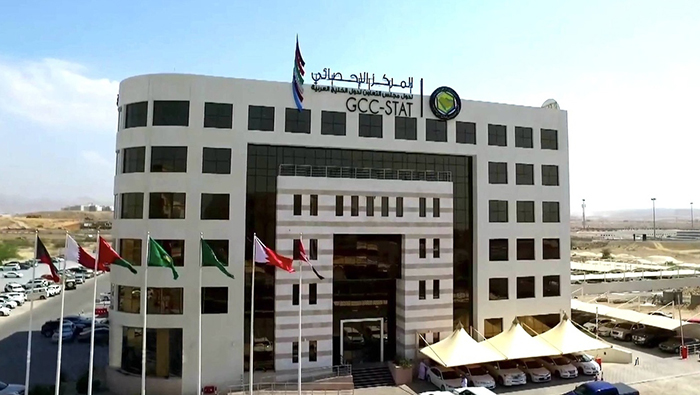
Muscat: Inflation across the GCC states remained stable at 1.8 percent in 2025, marking the second consecutive year below the 2 percent threshold, according to a report by the GCC Statistical Centre (GCC-Stat). The figure compares with 1.6 percent in 2024 and reflects the effectiveness of regional economic policies in containing price pressures.
The GCC's inflation rate is among the world's lowest, trailing the emerging and developing economies' average of 5.3 percent, the global average of 4.2 percent, Japan's 3.2 percent, the United States' 2.6 percent, and the eurozone's 2.1 percent.
Housing and miscellaneous goods and services were the main drivers of Gulf inflation, together accounting for about 73 percent of the total increase.
Among the main consumer price index groups, miscellaneous goods and services posted the highest inflation at 5.4 percent, followed by housing at 4 percent, culture and recreation at 2 percent, restaurants and hotels at 1.6 percent, food and beverages at 1.2 percent, education at 1 percent, and tobacco at 0.6 percent. Clothing and footwear rose 0.4 percent, while health, communications and furniture were unchanged. Transport prices fell -0.2 percent.
The report traced the trajectory of GCC inflation from 2020 to 2025, showing a rise from 1.5 percent in 2020 to 2.4 percent in 2021, before peaking at 3.2 percent in 2022. It then moderated to 2.3 percent in 2023 and 1.6 percent in 2024, before edging up slightly to 1.8 percent in 2025 — a trend that underscores relative stability against the backdrop of global economic fluctuations.
Among key trading partners, Brazil recorded the highest inflation at 5 percent, followed by the UK at 3.9 percent, Japan at 3.2 percent, India at 2.8 percent, the US at 2.6 percent, Germany at 2.2 percent, South Korea at 2.1 percent, Italy at 1.5 percent, and France at 0.9 percent. China posted the lowest at zero percent.
A 2.1 percent global drop in food and beverage prices helped ease imported inflation, though a 15.2 percent rise in natural gas prices and ongoing geopolitical tensions remain risks to monitor.
The report concluded that the convergence of inflation rates across the GCC and their sustained stability below 2 percent provide a strong foundation for deeper economic and monetary integration, while giving member states fiscal space for reforms and development spending. It also called for harmonising statistical methodologies and enhancing policy readiness for future external shocks.