Wednesday 16 / September / 2026
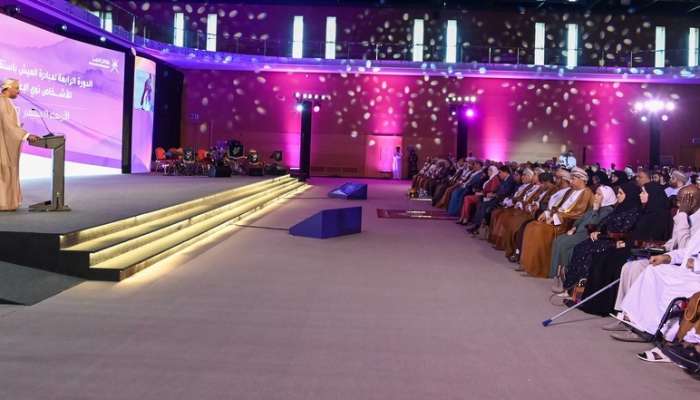
Salalah: The fourth edition of the "Living Independently" initiative for persons with disabilities commenced today in Salalah. The Sultanate of Oman is hosting the event, represented by the Ministry of Social Development, with the League of Arab States and the Union of Arab Chambers organizing it in partnership with the United Nations Industrial Development Organization (UNIDO).
The two-day edition aims to reinforce the right of persons with disabilities to live independently. This is pursued by enabling them to choose their lifestyle and place of residence, and by ensuring equitable access to community services and facilities. Such measures enhance their active participation and integration into society.
The initiative also seeks to foster a supportive environment that helps remove barriers and improves accessibility to facilities and services. It further aims to develop national policies and programmes in partnership with government, civil, and private entities in support of inclusion and empowerment. Additional objectives include raising community awareness of the right of persons with disabilities to independence, drawing on Gulf and Arab experiences in developing services provided to them, and strengthening their capacity to make decisions and manage their daily affairs in a manner that preserves their dignity and elevates their quality of life.
The opening of the edition was held under the patronage of His Highness Sayyid Marwan bin Turki Al Said, Governor of Dhofar, in the presence of Dr. Laila Ahmed Al Najjar, Minister of Social Development, with the participation of officials, experts, and specialists from the Sultanate of Oman and Arab countries.
The first day featured two main panel sessions. The first was titled "Policies, Technological Innovations, and Artificial Intelligence for Enabling Independence."
It comprised four working papers, including inclusive digital access governance and data security, the role of technological innovations and artificial intelligence in empowering Arab entrepreneurs, and the governance of flexible policies and the impact of artificial intelligence on drafting inclusive employment contracts. It also reviewed the "Omani Youth University Innovation" paper, which highlighted applied models of artificial intelligence services developed by students of higher education institutions to serve persons with disabilities.
The second session was titled "Social Responsibility and Economic Empowerment: Inclusive Employment Integration for Persons with Disabilities." It comprised four working papers.
The first reviewed the experience of the Ministry of Housing and Urban Planning in employment integration mechanisms and pioneering digital environmental preparation for employing persons with disabilities. The second addressed models of effective public-private partnership in employing persons with disabilities. The third examined the Arab Index for Corporate Social Responsibility: an Arab mechanism to enhance support for projects related to persons with disabilities.
The fourth paper focused on the importance of social responsibility governance and the establishment of standard frameworks for the private sector's commitment to the persons with disabilities file.
The first day also saw the opening of the accompanying exhibition, which featured a number of initiatives, projects, and pioneering experiences supporting the empowerment of persons with disabilities. The exhibition aims to showcase successful practical models, exchange expertise, and present innovative solutions capable of being scaled up and applied, thereby contributing to enhanced quality of services provided to this group.
The edition's proceedings continue on the second day with two training workshops. The first focuses on integrated entrepreneurial skills in digital marketing and building investment partnerships with the business community. The second reviews mechanisms for expanding vocational rehabilitation programmes and linking them to artificial intelligence systems and assistive technology.
The "Living Independently" initiative embodies the continuation of national and regional efforts to develop an integrated system that enhances the independence of persons with disabilities through the employment of modern technologies and the expansion of partnerships across various sectors.




