Sunday 18 / October / 2026
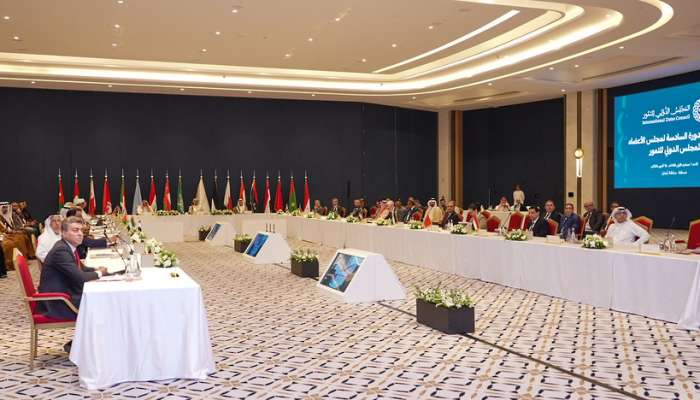
Muscat --- The Sultanate of Oman, represented by the Ministry of Agriculture, Fisheries and Water Resources, hosted today in Muscat the proceedings of the sixth session of the Members' Council of the International Dates Council. The session aimed to discuss a number of topics related to the development of the palm and dates sector and the enhancement of international cooperation in this field.
The meeting, featuring the participation of a number of member states, addressed a range of organizational and technical topics. It reviewed the Council's annual report, the most prominent achievements during the recent period, and matters related to the Council's plans, programs, and initiatives aimed at supporting and developing the palm and dates sector at the regional and international levels.
The Council also discussed several topics concerning the enhancement of cooperation among member states, and the exchange of expertise, knowledge, studies, research, technologies, and promising practices in the areas of production, quality, manufacturing, marketing, and international trade. This contributes to raising the competitiveness of date products and enhancing their presence in global markets.
Dr. Saud Hamoud Al Habsi, Minister of Agriculture, Fisheries and Water Resources, stated in his speech that hosting the proceedings of the sixth session of the Members' Council of the International Dates Council stems from the Sultanate of Oman's keenness to enhance its role in supporting the Council's decisions to reach the desired level. It also affirms its continuous support for the Council's efforts and cooperation with member states in implementing the Council's strategic initiatives and projects, and coordinating joint efforts.
Al Habsi affirmed that the palm and dates sector holds special strategic importance, representing a historical, cultural, social, and economic heritage deeply rooted in history. It is a fundamental pillar for food security, an important source of income and employment opportunities, and a key element in the sustainability of rural communities and agricultural oases.
He clarified that data indicates global dates production amounts to approximately 10 million tons annually, with the Middle East and North Africa (MENA) region accounting for 80 percent of this production. This reflects the strategic importance of this sector and the promising capabilities and opportunities it possesses to enhance international trade, develop manufacturing industries, and expand the scope of agricultural and food investments.
He pointed out that maximizing the economic return from this sector requires shifting from focusing solely on increasing production to building integrated value chains based on improving productivity and quality, developing sorting, packaging, manufacturing, and marketing processes, enhancing innovation, and opening new markets for dates and their products. This will raise their competitiveness and achieve greater economic returns for producers and investors.
Al Habsi reported that the International Dates Council is considered an effective platform for developing research, investment, and commercial partnerships among the member states and organizations of the Council. It enhances the exchange of information and data, encourages innovation and modern technologies, and adopts joint initiatives that contribute to raising the economic value of dates and improving the sector's competitiveness at the international level.
He indicated that the meeting of the sixth session of the Members' Council of the International Dates Council represents an important opportunity to continue building on the achievements realized at the country level. It aims to enhance joint institutional work and translate the International Dates Council's strategy into initiatives and programs with an economic impact that keeps pace with the aspirations of our countries and peoples toward a more productive, sustainable, and competitive sector.
He called for the importance of enhancing private sector participation in the Council's programs and initiatives, considering it a key partner in developing manufacturing industries, growing exports, innovating new products, and creating sustainable job opportunities, thereby achieving the shared interests of the member states.
Al Habsi concluded by affirming the role of the Kingdom of Saudi Arabia in supporting the Council since its establishment, and its contributions to enhancing its role and standing regionally and internationally. This is in addition to the continuous efforts of the member states to develop the palm and dates sector and enhance its contribution to achieving food security and sustainable development.
For her part, Princess Sarah Bandar Al Saud, Executive Director of the International Dates Council, delivered a speech via video conferencing. She clarified that the proceedings of the sixth session of the Members' Council of the International Dates Council, hosted by the Sultanate of Oman, come to continue joint work in the palm and dates sector and explore ways enabling the Council to respond to the priorities of member states, in light of the developments the sector is witnessing in production and international trade.
She added that the Council's work during the recent period has established a base of knowledge and expertise and made progress in the areas of research, capacity building, and international cooperation. This outcome confirms the importance of prioritizing international references and approved standards, given their impact on the quality of dates and market confidence, and the convergence of specifications and exchange of data and experiences among member states that this requires.
She affirmed the Council's keenness to make the needs of member states the basis for selecting projects and setting priorities, and that the success of the Council's programs should be measured by what they add to the capabilities of the member states. She expressed her hope that the Council becomes a reliable international reference for knowledge and standards, and a platform where the expertise of member states integrates to meet their interests, making cooperation among them a pathway to the growth and enhanced competitiveness of the dates sector.
In a related context, Eng. Abdulrahman Abdulmohsen Al Fadhli, Minister of Environment, Water and Agriculture of Saudi Arabia and Chairman of the Members' Council of the International Dates Council, delivered a speech during the sixth session meeting via video conferencing, in which he expressed his thanks and appreciation for the distinguished efforts of the Sultanate of Oman in hosting and organizing the proceedings of this session.
He stated that the palm and dates sector is currently witnessing an important stage of transformation, moving beyond production growth to maximizing value, raising competitiveness, developing markets and industries, and enhancing sustainability. He pointed out that these transformations highlight the real capabilities the sector possesses to contribute to enhancing food security, supporting agricultural sustainability, raising resource utilization efficiency, and creating sustainable economic and developmental opportunities. This contributes to consolidating the position of dates as a food and economic sector of growing global importance.
He added that the dates sector has recorded increasing global growth over the past five years, with exports rising by approximately 6 percent, driven by changing consumption patterns and growing demand for healthy food products. This represents a strategic opportunity for the International Dates Council to link the capabilities and expertise of member states with the growth in global demand, especially since the production of these countries accounts for about 60 percent of global production, with an annual output approaching six million tons. This provides the Council with an opportunity to contribute to developing production, manufacturing, and marketing, and enhancing the competitiveness of dates and their products in global markets.
He pointed out that the Council, since its establishment, and with the support and cooperation of member states, has been able to achieve many gains. It has also worked to translate its decisions into practical and executive steps that have contributed to developing the palm and dates sector at various levels. He noted that the adoption of the strategic plan during the extraordinary meeting held in the first quarter of the current year came to form an important step in drawing a clear framework to guide the Council's work and priorities during the upcoming phase, transitioning from planning to execution, and from objectives to results.
He reported that this session is held to continue the work and make decisions that enable the Council to perform its role more effectively, transforming the goals of the strategic plan into a practical reality that opens new horizons for the global growth of the dates sector in the fields of production, manufacturing, and marketing. Achieving these targets requires further cooperation, coordination, exchange of expertise and experiences, and the unification of joint efforts within the framework of the Council's work and strategic priorities. This enhances its contribution to food security, supports economic growth, and achieves a sustainable impact that benefits member states, with its impact extending to the whole world.
The meeting touched upon the importance of the Council's role in providing data and indicators related to production, trade, and markets, and supporting member states in developing joint projects and building partnerships with the private sector, universities, research centers, and relevant institutions. This is alongside developing national capacities and exchanging expertise in the areas of innovation, sustainability, and value chains. The meeting also addressed the topic of state membership and the opportunities it provides to enhance the participation of member states in formulating trends, strategies, and initiatives related to the future of the palm and dates sector, in addition to enhancing cooperation in the areas of standards, quality, food safety, and access to international markets.