Monday 09 / November / 2026
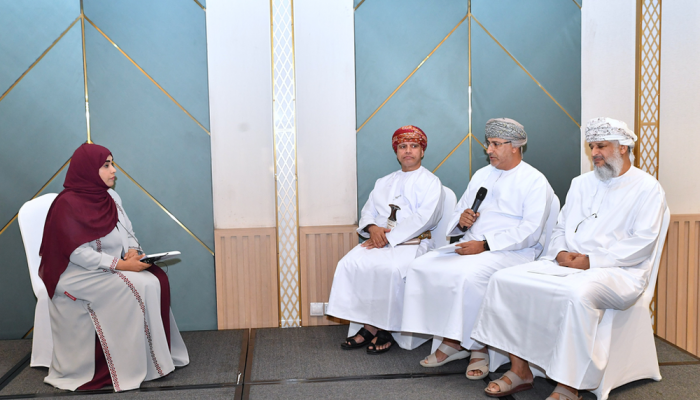
Muscat: The activities of the National One Health Workshop, organized by the Ministry of Health represented by the Centre for Disease Control and Prevention, commenced today.
The event was held under the auspices of Dr. Abdullah Ali Al Amri, Chairman of the Environment Authority.
The three-day workshop aims to establish a sustainable national mechanism for multi-sectoral coordination in the field of One Health, with clear roles and responsibilities.
Badr Saif Al Rawahi, Acting Director General of the Centre for Disease Control and Prevention at the Ministry of Health, delivered a speech in which he pointed out that today's health security is not created by a single institution, nor is it achieved through the efforts of a single sector; rather, it relies on a solid national partnership in which expertise is integrated, visions are unified, and efforts are joined to protect humans, animals, and the environment.
He added that the Sultanate of Oman recognized the importance of this integration, and its national institutions worked to lay the foundations of cooperation among the health, agricultural, and environmental sectors through joint efforts in surveillance and response to zoonotic diseases, addressing antimicrobial resistance, enhancing technical capabilities, and elevating levels of readiness and preparedness to face shared health threats, in cooperation with national partners and regional and international organizations.
He noted that the Ministry of Health views these efforts as an important national asset and a solid foundation to build upon, looking forward to moving from cooperation based on initiatives and joint efforts to sustainable institutional integration governed by clear coordination mechanisms and supported by an effective system for information exchange, risk assessment, and joint decision-making.
The workshop targets the participation of 70 individuals representing various sectors related to the One Health approach from the Ministry of Health, the Ministry of Agriculture, Fisheries and Water Resources, the Environment Authority, Muscat Municipality, the Ministry of Transport, Communications and Information Technology, the Oman Vision 2040 Implementation Follow-up Unit, the Authority for Public Services Regulation, and the scientific research sector, alongside academics from Sultan Qaboos University and A'Sharqiyah University, and representatives from the private sector.
Over the course of the three days, the workshop features interventions from representatives of the health and agricultural sectors, as well as representatives of the Environment Authority and the World Health Organization, presenting their visions on the importance of the One Health approach and the possibility of its application in the Sultanate of Oman.
The workshop includes holding panel discussions to define public health priorities in the Sultanate of Oman, formulate the National One Health Plan, and prepare a report on the outcomes of the workshop.
The workshop aims to promote the multi-sectoral One Health approach to establish a One Health mechanism, gather information from relevant sectors regarding the use of this approach to address zoonotic diseases and other One Health challenges, and develop an action plan addressing key technical elements to strengthen the One Health mechanism.
Zoonotic diseases transmit between animals and humans, affecting health, livelihoods, and national and global health security. The importance of the One Health approach emerges prominently in addressing these diseases.
The One Health approach is an integrated global trend linking human, animal, plant, and environmental health, enhancing cooperation and coordination among various relevant sectors and entities to effectively prevent and respond to health risks. In line with this trend, the importance of framing the One Health approach in the Sultanate of Oman through a clear national plan comes to the fore, contributing to unifying performance, coordinating multi-sectoral efforts and activities, and achieving related national goals.
This step builds upon the rich track record and previous efforts of the Sultanate of Oman in this field, foremost of which is drafting and activating the National Action Plan on Antimicrobial Resistance, culminating in the Sultanate of Oman hosting the Third High-Level Ministerial Conference and issuing the "Muscat Manifesto" to accelerate One Health actions. This step also relies on the continuous efforts of the National Committee for Integrated Vector Management.
Previous national plans (such as vector control and antimicrobial resistance programs) demonstrated a direct and decisive impact on the public health system, as multi-sectoral coordination and precise entomological and epidemiological surveillance contributed to reducing rates of vector-borne disease infection, curbing the spread of outbreaks, and protecting society through a data-driven proactive vision.
It is worth noting that the workshop organized by the Ministry of Health comes in cooperation with the Ministry of Agriculture, Fisheries and Water Resources, the Environment Authority, the World Health Organization, and the Food and Agriculture Organization of the United Nations (FAO).