Tuesday 17 / November / 2026
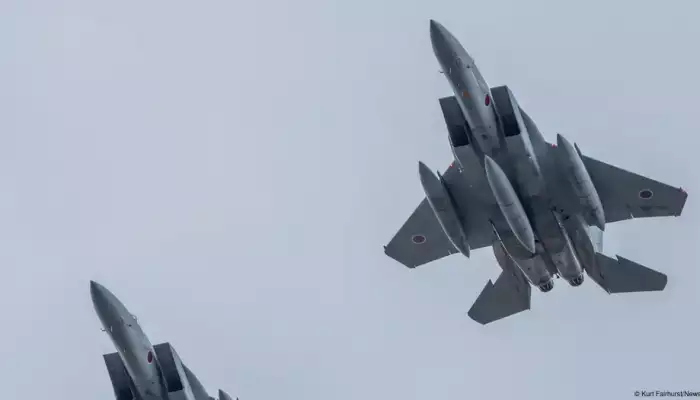
Japan scrambled fighter jets in its airspace after two suspected Russian aircraft entered its territory on Tuesday morning, an incident that could further strain ties between the two countries.
Tokyo said it had lodged a "very stern protest" with Moscow after the incident.
Japan lodges protest against Russia over alleged airspace violation
The aircraft entered Japan's airspace near Okinoshima in southwestern Japan shortly after 4:00 a.m. local time Tuesday (1900 GMT Monday), Japanese Chief Cabinet Secretary Minoru Kihara said.
"The violation of our national airspace by Russian aircraft is not only a grave infringement of our country's sovereignty, but also a threat to our security and is completely unacceptable," Kihara said.
"We lodged a very stern protest with Russia through diplomatic channels and strongly demanded measures to prevent any recurrence," he said.
Japan had lodged a similar protest with Russia in 2024 after a Russian patrol plane entered its airspace three times, marking the first confirmed incursion since 2019.
Strains increasing in Japan-Russia ties
Japan's relations with Moscow have soured over the past weeks after a Japanese journalist was arrested on spying allegations and after Russia seized four of Japan Tobacco's Russian assets.
Russia and Japan share a decades-old dispute over the status of a number of islands in the Pacific Ocean.
However, relations especially deteriorated further after Tokyo joined global sanctions against Moscow over its war in Ukraine.
South Korea says Russian aircraft entered defense zone
Tuesday's reported violation comes soon after South Korea said it too had deployed fighter jets and conducted tactical maneuvers after several Russian military aircraft entered its air defense zone in the early hours of Tuesday.
An air defense zone is not sovereign airspace but a buffer area in which countries identify approaching aircraft for security purposes.
Military aircraft are generally expected to notify the relevant country before entering its air defense zone, though this is not legally required.
Kihara said the aircraft travelled through the Tsushima Strait and went between Yonaguni Island and Taiwan before heading to the Pacific.