Sunday 22 / November / 2026
Sur: The Governorate of South Al Sharqiyah witnessed during 2025 and 2026 a growing developmental momentum that reflects a shift in the approach to local development. The focus has moved from providing basic services to building a more integrated development system. This system rests on improving quality of life, enhancing the efficiency of infrastructure, diversifying the economic base, and harnessing the governorate's natural and economic assets to create sustainable opportunities for the local community.
This shift is evident in the diversity of projects across the governorate. These projects span roads, health, housing, tourism, fisheries, food security, environment, sports, and community facilities. They reflect a drive towards a more diversified local economy. They also strengthen the ability of the wilayats to invest their comparative advantages and turn them into added value and tangible development opportunities. The total length of roads completed over the past five years reached about 217 kilometres.
On economic performance, non-oil activities recorded growth in their added value, reaching about OMR1.8 billion. This compares with about OMR1.7 billion in 2024. The figures reflect the expanding contribution of non-oil economic activities and confirm the importance of continued investment in promising production and service sectors.
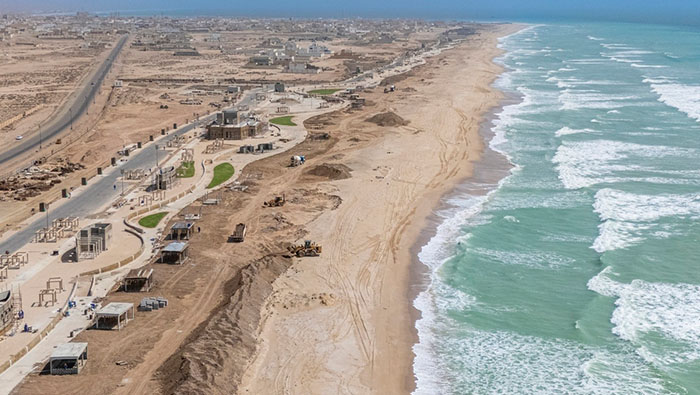
The governorate is moving towards developing its coastal, natural, and heritage destinations through several projects. These include the Al Ashkharah tourism waterfront, with a completion rate of 85%. They also include the Sur Public Park, at 68%, and the Al Hayrah area in the Wilayat of Al Kamil Wal Wafi, at 85%. The multi-purpose centre in the Wilayat of Masirah has reached 65%, while the Qahwan trail project in Jaalan Bani Bu Hassan stands at 10%. The list also includes the maritime waterfronts in the Asilah area, at 45%, and the Al Barr trail in the Wilayat of Sur, at 55%.
The governorate has also seen the implementation of several tourism and investment projects. The most prominent include the Asilah Hills Resort, the Al Danah Resort in Al Ashkharah, and the fishermen's harbour at Ras Al Hadd. The importance of these projects is not limited to providing recreational and service facilities. It extends to raising the governorate's tourism and investment appeal, stimulating commercial activity, and opening wider horizons for small and medium enterprises and entrepreneurs. These projects also reinforce the presence of the local urban and cultural identity.
Developing infrastructure and road networks is one of the main pillars supporting development in the governorate. The Sultan Turki bin Said Road project, linking the wilayats of Al Kamil Wal Wafi and Sur, stands out. Its overall completion rate across its various phases and sections has reached about 92%.
The project has strategic importance. It improves connectivity between the wilayats, facilitates movement, and raises the efficiency of the road network. It also enhances the flow of commercial and tourist traffic and supports links between population and economic centres. All of this reflects positively on development activity in the governorate.
This direction complements the development of basic services, foremost among them the health sector. Work is advancing on the Al Falah Hospital project, which has reached a completion rate of 66%. The hospital will have a capacity of 170 beds and will serve about 150,000 people in the wilayats of Jaalan Bani Bu Ali, Jaalan Bani Bu Hassan, and Al Kamil Wal Wafi. The Jaalan Bani Bu Ali Health Centre project has reached 93%, and the new Jaalan Bani Bu Hassan Health Centre project is also under way. These projects embody a drive to strengthen the health system and bring specialised services closer to citizens. They contribute to raising the health sector's readiness and improving quality of life.
Progress in basic services has also extended to education. The number of government schools rose from 92 to 106. This reflects the expansion of educational infrastructure and the system's enhanced capacity to absorb growing demand for education across the governorate's wilayats. The governorate has also rehabilitated several educational institutions. These include Al Muhallab bin Abi Sufrah School for Boys (5-12) in the Wilayat of Masirah, Misk Al Ilm School (1-4), Fatima bint Utbah School for Girls (5-8) in the Wilayat of Jaalan Bani Bu Ali, and Ahmed bin Majid School for Boys (9-12) in the Wilayat of Sur.
In the heritage and tourism sector, the governorate has carried out several restoration and maintenance projects for historical and heritage landmarks. These include maintenance of Ras Al Hadd Fort and the Al Afiyah Heritage Museum in the Wilayat of Sur, and Al Badi'ah Fort and Al Sunaidi Mosque in the Wilayat of Jaalan Bani Bu Ali. They also include restoration and maintenance of Awlad Hamad Mosque in the Wilayat of Jaalan Bani Bu Hassan. These efforts aim to preserve cultural heritage, safeguard cultural identity, and enhance the governorate's tourism assets.
Amid growing tourist traffic and expanding related services, the tourism accommodation sector has seen remarkable growth. The number of hotel establishments rose from 79 in 2020 to 207 in 2025, an increase of 128 establishments. This reflects the governorate's growing appeal for tourism investment, the widening base of services offered to visitors, and the tourism sector's expanding contribution to the local economy.
The governorate is keen to organise several seasonal tourism and entertainment forums and festivals each year across its wilayats. The most prominent include the Masirah Winter Festival, the Al Tahayem Winter Season, the Al Ashkharah Ambience Forum, and the Sur Maritime Heritage Festival. These events stimulate tourism and economic activity, enhance tourist appeal, and support entrepreneurs, small and medium enterprises, and productive families. They also provide opportunities to market their products and highlight the governorate's tourism, natural, and cultural assets, thereby promoting sustainable tourism development.
This direction gains further dimension through the sustainable use of environmental resources. The Al Saleel Natural Park development project is one of the environmental tourism projects and has reached a completion rate of 10%. The turtle reserve, the Jabal Qahwan reserve, and the Ghaf Trees Natural Reserve are also important assets for ecotourism and biodiversity conservation. Data for the 2025-2026 season show 16,000 visitors to the turtle reserve and Al Saleel Natural Park. This highlights the importance of balancing the protection of natural resources with the development of responsible tourism experiences that support the local economy. The Green Trail project is also a natural outlet. It aims to convert a construction waste landfill site into a natural park.
In the industrial sector, the governorate has seen the opening of the Al Ghaith Chemical Industries Complex. It is one of the strategic industrial projects in the chemicals sector. It contributes to enhancing the industrial sector's added value, supporting economic diversification, and attracting quality investments.
In the fisheries and food security sector, the governorate has seen an expansion of aquaculture-related investments through fish farming projects in Quroon and Al Khawimah. Several infrastructure projects supporting the sector are also continuing. These include the multi-purpose port in the Wilayat of Masirah, the model fishermen's village in Masirah, and projects to rehabilitate fishing harbours and fish landing sites. These contribute to enhancing fish production, supporting food security, and raising the sector's added value.
In the sports and youth sectors, efforts continue to enhance infrastructure and develop facilities supporting sports, cultural, and youth activities in the governorate. Several development projects are underway, most notably the equestrian arena project in the Wilayat of Sur, which has reached a completion rate of 80%. It aims to provide a specialised facility to support equestrian sport and host events and championships, helping preserve this authentic Omani heritage and strengthen its presence in society. The Youth Cultural Centre project in the Wilayat of Sur is also being implemented. It is part of efforts to develop cultural and youth facilities, provide a stimulating environment for nurturing talent and creative abilities, and enhance youth participation in various activities and community programmes.
Accordingly, the most distinctive feature of this phase is the widening scope of development and the integration of its tracks. Infrastructure advances in parallel with the development of production sectors, the development of tourist destinations, environmental protection, and the enhancement of social and economic services. This strengthens the position of South Al Sharqiyah as an attractive destination for investment and sustainable development. It is a governorate capable of harnessing its diverse assets to achieve sustainable added value that benefits citizens and future generations.
The value of development achievements is evident in their direct impact on citizens' lives. This shows in improved services, prepared public facilities, enhanced housing stability, and support for economic and social activities. From this standpoint, South Al Sharqiyah showcases completed projects and delivered service works that have met specific community needs. It also showcases strategic projects still under way that extend the ongoing development efforts.
In the context of developing community facilities, projects have been implemented to meet the needs of families and youth and to support sports, cultural, and recreational activities. The most prominent include Al Nahdah Park in Masirah, Al Ghaf Park in Jaalan Bani Bu Hassan, the public park in Al Kamil Wal Wafi, Al Suwaih Park and the Al Hadd waterfront in Jaalan Bani Bu Ali, the maritime waterfront in the Al Aijah area, and improvements to parks across all wilayats of the governorate.
These achievements are inseparable from the expected economic impact of projects under implementation. Developing waterfronts, gardens, and parks creates opportunities for commercial and service activities and enhances opportunities for small and medium enterprises. Fisheries and agriculture projects support production and food security. The development impact is therefore not limited to the facility itself. It extends to the jobs, economic activity, and wider opportunities for community participation in development that it can generate.
The total cost of development projects implemented and under implementation, with government and private funding, in South Al Sharqiyah reached about OMR360 million up to October 2026. This reflects the scale of development momentum across various sectors. It embodies continuous efforts to develop infrastructure, raise service standards, and enhance the foundations of sustainable development across the governorate's wilayats.
In the coming phase, South Al Sharqiyah is preparing to implement a package of strategic development and investment projects. These aim to enhance tourism, cultural, and heritage assets and to develop infrastructure and public services. The most prominent planned projects include the Khor Al Bat’h development project, the Oman Maritime Museum, the Cultural and Youth Centre, the maritime waterfront in the Rasagh area, the visitor centre in the city of Qalhat, and the development of Mibam village and the maritime waterfront in the Ras Al Hadd district of the Wilayat of Sur. They also include the Al Mashariq market project in the Wilayat of Al Kamil Wal Wafi, the Jaalan Bani Bu Ali trail, and the dualisation of the Al Kamil Wal Wafi - Jaalan Bani Bu Hassan - Jaalan Bani Bu Ali road. The fish industries city and the restoration and maintenance of several historical mosques in the governorate are also part of the plan.
The plan also includes several tourism and investment projects linked to the hospitality sector. The most prominent are the Al Sheedi Resort in the Ras Al Hadd district, the development and maintenance of tourism facilities and installations in Ras Al Hadd, Ras Al Jinz, and Wadi Shab, maintenance of the Atana Al Ashkharah rest house, and the Masirah Island Resort project. The Qahwan trail project in the Wilayat of Jaalan Bani Bu Hassan is also included. These projects enhance the diversity of tourism experiences and raise the readiness of tourist destinations in the governorate.
In the health sector, projects include Al Falah Hospital in the Jaalan sector and the establishment of a health centre in the Wilayat of Jaalan Bani Bu Ali. These contribute to enhancing health services and meeting the needs of population and development growth in the governorate's wilayats.
These projects come within the governorate's drive to maximise the use of its natural, marine, heritage, and cultural assets. They aim to diversify tourism products, stimulate investment, and strengthen infrastructure and public services. All of this contributes to achieving sustainable and balanced development, raising quality of life, and creating promising economic opportunities for the people of South A’Sharqiyah.
South A’Sharqiyah is working to enhance its economic competitiveness and attract more investment through an integrated system of enablers and initiatives. These are based on the governorate's comparative advantages and strategic location.
The governorate benefits from its coastal extension on the Arabian Sea, the diversity of its natural resources, and its hosting of several promising ports, tourism sites, and economic sites. This enhances its appeal for investment in tourism, fisheries, food security, industry, logistics, and energy.
The governorate also focuses on developing the business environment. It does so by strengthening integration and coordination among investment-related bodies, simplifying procedures, and raising the efficiency of services provided to investors. This helps facilitate the investor's journey and improves competitiveness and the governorate's investment appeal. In addition, the governorate attaches special importance to investment promotion. It participates in economic and investment exhibitions and forums and organises introductory meetings with investors and entrepreneurs. This helps attract capital, strengthen investment partnerships, and support the goals of economic diversification and sustainable development in line with Oman Vision 2040.
Existing investments in South Al Sharqiyah are estimated at nearly OMR2.5 billion. This reflects the governorate's growing standing as an attractive investment destination, supported by its economic assets and diverse competitive advantages.
Oil, refining, manufacturing and resource-based industries account for the largest share of total investments. This confirms the industrial sector's pivotal role in supporting economic activity in the governorate. Fisheries, the blue economy, and the mining sector also stand out, alongside the tourism sector, among the most attractive sectors for capital. They benefit from the governorate's natural, marine, and tourism assets.
Partnership with the private sector is a fundamental contributor to supporting development in South Al Sharqiyah. It works by unifying efforts and directing investments and social responsibility initiatives towards implementing development projects and developing public facilities.
These partnerships are embodied in the implementation of several quality projects. The most prominent include the Sur Public Park, the maritime waterfront trail in the Al Barr area, the development of Al Saleel Natural Park, the establishment of the equestrian arena, the multi-purpose centre in the Wilayat of Masirah, the Youth Cultural Centre in the Wilayat of Sur, and the Qahwan trail in the Wilayat of Jaalan Bani Bu Hassan. They also include contributions to implementing several road projects, including the carving of mountain roads that have helped strengthen links between population centres and improve access to tourism and development sites.
The governorate continues to implement several strategic projects aimed at developing tourism infrastructure and raising the quality of facilities and services offered to visitors. The most prominent include the development of the maritime waterfront in the Ras Al Hadd district, the Sur Public Park, and the multi-purpose centre in the Wilayat of Masirah. They also include waterfront, tourism trail, and public park projects. These contribute to enhancing the appeal of tourist destinations, improving the urban landscape, and preparing a more attractive investment environment for tourism, recreational, and service activities.
The governorate also attaches special attention to enhancing ecotourism in cooperation with the relevant authorities. This is done through sustainable investment in natural assets and reserves that form a fundamental pillar of this sector. Foremost among them are the turtle reserve at Ras Al Jinz, Al Saleel Natural Park, the Jabal Qahwan reserve, and the Ghaf Trees Natural Reserve. This achieves a balance between preserving natural resources and biodiversity on the one hand, and developing quality, sustainable tourism products and experiences on the other. Work is also under way to develop several environmental tourism projects, including the Al Saleel Natural Park development project, enhancing the governorate's standing as a leading ecotourism destination in the Sultanate of Oman.
These efforts are complemented by organising tourism and entertainment seasons, festivals, and events throughout the year. The most prominent include the Masirah Winter Festival, the Al Tahayem Winter Season, the Al Ashkharah Ambience Forum, and the Sur Festival. Investment in the tourism accommodation sector and related services is also encouraged. The number of hotel establishments in the governorate has grown remarkably, reaching 207 by the end of 2025. This reflects the governorate's growing appeal for tourism investment and the widening base of services offered to visitors.
The fisheries and food security sector in the governorate receives continuous attention as one of the promising economic sectors and a main pillar for diversifying the local economy. Indicators reflect growing fishing activity in the governorate. Artisanal catch rose from 245,277 tonnes in 2020 to 277,623 tonnes in 2025. The governorate ranked second in the Sultanate of Oman in fish production for 2025, with 222,726 tonnes. Production up to the end of October 2026 reached about 115,055 tonnes.
As part of developing infrastructure supporting the fisheries sector, work continues on several strategic projects. The most prominent include the multi-purpose port project in the Wilayat of Masirah, which has reached a completion rate of 27%, the design and rehabilitation of the wave breaker in the Tiwi district, and the design and implementation of works to mitigate the problem of sand deposition at Al Ashkharah port. The model fishermen's village project in the Wilayat of Masirah is also under way. These projects improve the efficiency of facilities and services linked to fishing activities, facilitate fish landing and handling, and enhance the economic benefit from marine resources.
In aquaculture, the governorate is implementing and developing several quality projects. These include shrimp farms in the Quroon, Khawimah, Awreb, Jadaymah, and Jashir areas, and the pond shrimp farming project in the Sulaib area. They also include the pilot project for farming rock oysters and sandfish sea cucumber in the Wilayat of Masirah, and projects for farming barramundi and koffer fish in the Wilayat of Sur. These projects are an important contributor to diversifying fish production, strengthening related industries, and opening new horizons for investment, export, and job creation.
In the food security sector, the governorate has made tangible progress in attracting quality investments. The total investment value of projects whose contracts were signed up to the end of October 2026 reached about OMR48.94 million, distributed across seven investment projects. These include three projects in the fisheries sector worth OMR48,330,666, two projects in the plant sector worth OMR358,000, and two projects in the animal sector worth OMR250,000.
Efforts also continue to develop agricultural production through smart farming projects for vegetable production and a project to expand fig cultivation. These enhance the use of modern technologies in agriculture, raise the efficiency of natural resource use, and support local production and food supply chains.
In the water resources sector, efforts have included the construction of a groundwater recharge dam on Wadi Sal in the Wilayat of Jaalan Bani Bu Ali. Fifteen aflaj “ancient irrigation system” have also been rehabilitated across the governorate's wilayats. These efforts aim to preserve water resources and enhance their sustainability and to support agricultural activities and local communities. They contribute to achieving a balance between development requirements and the protection of natural resources.
South Al Sharqiyah continues its efforts to empower Omani youth and enhance their employment opportunities. In parallel, it supports the growth of small and medium enterprises and prepares them to contribute to the local economy. This is done through an integrated system of initiatives and programmes implemented in cooperation with the relevant authorities, foremost among them the Directorate General of Labour and the Authority for Small and Medium Enterprises Development (Riyada).
In the employment sector, 6,110 job opportunities were provided in various specialisations and qualifications in private sector institutions in the governorate in 2026 up to the end of September. Seventy-nine persons with disabilities were also employed, and Omanisation and replacement plans and partnership with the private sector are being followed up.
The governorate has also completed procedures to confirm beneficiaries of the "Sahim" initiative, bringing the total employed under the initiative to 103 male and female employees. Replacement programmes have also been implemented in several targeted professions, with 21 citizens replacing expatriate workers. This helps enhance employment opportunities for national cadres and supports Omanisation targets.
Efforts continue to prepare youth for the labour market through on-the-job training initiatives targeting 200 training opportunities. Programmes related to self-employment are also under way. These enhance the readiness of national talent and open diverse paths for employment and self-employment.
As part of qualifying national talent and developing youth skills, the governorate implements several quality initiatives in partnership with government and private bodies. The most prominent is the "Al Wustad" programme for crafting models of traditional Omani ships, with 25 young Omanis taking part in a nine-month training programme. It aims to preserve Omani maritime heritage and develop participants' craft and applied skills. The "Makeen" initiative is also being implemented to develop digital skills and prepare youth to benefit from digital economy opportunities. The "Wathaq" camp specialises in documentary filmmaking and digital content creation. Hackathons, forums, and knowledge programmes that promote innovation and develop future skills are also organised.
For small and medium enterprises, initiatives vary across training and qualification, specialised consultancy, incubation programmes, local supplier development, and linking enterprises to business and procurement opportunities. They also include organising exhibitions, markets, and marketing events that allow enterprises to promote their products and services and expand their customer base. Initiatives to promote innovation and modern technologies and raise competitiveness and sustainability are also part of the mix.
These efforts are complemented by the implementation of 22 initiatives during 2026. These include supplier development for purchases and tenders, monitoring and activating local content legislation, the "Entrepreneur Readiness" programme, and the "Riyada Deal" initiative supporting start-ups. Initiatives supporting craftspeople and persons with disabilities and qualifying institutions operating in various economic sectors are also included.
The governorate attaches growing attention to digital transformation and the use of artificial intelligence technologies to support decision-making, improve monitoring efficiency, and raise service quality. It also strengthens development partnerships with the private sector to benefit from available expertise and capabilities, accelerate delivery, and maximise the economic and social impact of projects.
On climate challenges, the governorate continues, in cooperation with the competent authorities, to implement road development projects and rehabilitate facilities affected by weather conditions. It is building protection works, rainwater drainage networks, and rehabilitating wadi channels. These enhance the readiness of infrastructure and its ability to adapt to climate variables and reduce future risks. The governorate is also developing the business environment, simplifying procedures, raising institutional performance efficiency, and improving the quality of government services. This helps accelerate development and enhance the governorate's investment appeal.
In the roads sector, maintenance of dirt roads covering about 1,653 kilometres continues, with a completion rate of 90.78%. Maintenance of asphalt roads over a distance of nearly 1,109 kilometres continues, with a completion rate of 67.01%. Maintenance works include preventive and emergency maintenance, repairing damage, and cleaning side drainage channels. These contribute to raising the efficiency of the traffic network and enhancing road safety.
Projects to develop internal roads and strengthen links between wilayats and villages are also continuing. The most prominent include the project to complete the remaining works of the dualisation of the road from the Gas Roundabout to the Bilad Sur Roundabout. They also include the design and implementation of the Wadi Bani Jaber road - Phase Two in the Wilayat of Sur, which serves several villages and population centres. The dualisation of the Al Kamil Wal Wafi - Jaalan Bani Bu Hassan - Jaalan Bani Bu Ali road, and the paving of the road linking Jaalan Bani Bu Ali with the Al Libdai’ah and Al Ghaynah areas, are also under way. The Al Jabal Al Abyad road project in the Tiwi and projects to rehabilitate internal roads damaged by weather conditions and build new roads in several wilayats are also part of the programme.
In the management of rainwater and wadi risks, the governorate attaches special attention to strengthening infrastructure related to water drainage and protection from wadi flow risks. This is done by implementing rainwater drainage networks within road projects, building box culverts, walls, and side protection works, and rehabilitating wadi channels. The rainwater drainage network project in the Wilayat of Sur is also being implemented as part of efforts to reduce water accumulation, raise infrastructure efficiency, and enhance the wilayat's readiness to deal with various climate conditions.
The results of the public opinion survey on evaluating government services in South Al Sharqiyah during 2026 showed continued improvement in beneficiary satisfaction with the services provided. The overall satisfaction index reached 7.4 out of 10. Electronic services recorded the highest satisfaction level among evaluation indicators, at 8.0 points. This reflects the effectiveness of efforts to develop government services and enhance the efficiency of their delivery channels.
These results reflect progress in several aspects of the beneficiary experience. Foremost among them are ease of procedures, speed of transaction completion, and quality of service provided. This confirms the impact of continuous work on developing the service environment and improving responsiveness to beneficiary needs.
In the roads maintenance sector, maintenance of dirt roads covering about 1,653 kilometres continues, with a completion rate of 90.78%. Maintenance of asphalt roads over a distance of nearly 1,109 kilometres continues, with a completion rate of 67.01%. Maintenance includes preventive and emergency work, repairing damage, and cleaning side drainage channels.
South Al Sharqiyah attaches strategic importance to digital transformation as one of the main enablers for raising institutional performance efficiency, improving the quality of government services, and enhancing the beneficiary experience. These efforts culminated in the approval of the Strategic Plan for Digital Transformation of South Al Sharqiyah (2026-2030). The plan represents a roadmap for developing digital services, automating procedures, strengthening digital governance, and using data and emerging technologies to support decision-making. This is in line with the goals of Oman Vision 2040 in building a more efficient, flexible, and responsive government apparatus.
The plan includes a package of quality projects and initiatives aimed at developing the government work system and improving the beneficiary experience. In this context, the governorate has expanded the use of artificial intelligence technologies, including generative and agentic AI. It has done so by developing several specialised digital solutions and platforms. The most prominent include an AI-supported satellite image analysis platform and the "Furas", "Jahiz", "Rawasi", and "Manarah" platforms. This digital system has helped strengthen data and institutional knowledge management, analyse spatial and urban data, manage investment opportunities, automate procedures and operations, and support planning and decision-making. It has helped save time and effort, accelerate the completion of procedures and services, raise automation efficiency, and improve the quality of government services and the beneficiary experience.
The governorate has also developed the "Maktabi" system, the electronic portal, and the "Mashariq" application, enhancing the digital work environment and facilitating access to services and information. Among the innovative technology initiatives adopted by the governorate is the Smart Hat project. It uses augmented reality technologies to support field work and raise the efficiency of work environments. It provides immediate access to information and data during work and enables direct communication with engineers and specialists remotely. This helps raise productivity, enhance occupational safety, and support decision-making at operational and field sites.
As part of simplifying procedures and improving the beneficiary journey, the governorate has expanded the automation of government operations and services through the "Jahiz" platform. It has also developed specialised digital solutions such as "In'am" for smart slaughterhouses and projects for chatbots and interactive digital services. These operations help accelerate procedures, reduce reliance on manual transactions, and improve the efficiency of government services provided to citizens and investors.
The governorate has also attached attention to building a system supporting innovation and digital transformation. It has implemented the South Al Sharqiyah Hackathon and the Smart Governorates Conference to promote knowledge exchange and review digital experiences and solutions supporting digital transformation and local development. It has also supported the Climate Innovation Hackathon (Ecothon), implemented by the Environment Authority in cooperation with the Oman LNG Company to develop innovative solutions to environmental and climate challenges.
The governorate has also been keen to enhance digital awareness and spread the culture of digital transformation. It has done so through an integrated communication and media plan that included producing introductory and awareness materials and films, introducing digital projects across various media platforms, and participating in specialised events. It also participated in the Digital Transformation Ambassadors initiative implemented by the Ministry of Transport, Communications and Information Technology. The governorate's ambassadors helped spread awareness of digital services and modern technologies and took part in seasons, community events, and national exhibitions specialised in digital government and digital transformation.
On digital infrastructure, the governorate has completed the equipping of the modern data room and the development of technical infrastructure supporting digital systems and services. A specialised team has also been formed to develop digital services and infrastructure, improve the beneficiary journey, and enhance integration between government systems. This ensures the sustainability of development and raises the efficiency of digital services.
These efforts have reflected on the governorate's digital transformation journey. The percentage of digitised services reached 58%, while fully digitally transformed services reached 38%. Beneficiary satisfaction with digital services reached 80%. This confirms the progress made in implementing digital transformation targets and the continued work to develop digital services, simplify procedures, and raise government performance efficiency in the coming phase.
During the period from 2021 to 2026, the number of development projects implemented reached 64, and 180 projects within the Governorates Development Programme. These varied between developing gardens, waterfronts, and parks; establishing recreational and sports facilities; developing markets and internal roads; and implementing lighting projects, rainwater drainage networks, and flood protection channels. These contribute to improving the urban landscape, enhancing infrastructure efficiency, and raising the level of services provided to the community.
As part of enhancing quality of life and housing stability, the land sector has seen the completion of several initiatives that touched community needs. The most prominent include providing 573 housing options with a completion rate of 100%, and completing 399 compensation cases for land affected by government and planning projects at 100%. A further 172 cases were completed within social housing initiatives. These enhance access to suitable housing, consolidate family and social stability, and ensure the efficiency and fairness of procedures.
On real estate development, the governorate is moving towards enhancing urban investment and providing integrated, sustainable residential communities through residential neighbourhood development projects. The most prominent is the Al Falah neighbourhood project in the Wilayat of Jaalan Bani Bu Ali, on an area exceeding 208,000 square metres. It includes 117 housing units and 79 land plots. The Al Rafadah neighbourhood project in the Wilayat of Jaalan Bani Bu Hassan is also part of this direction, along with the allocation of sites for real estate development in the Wilayat of Sur, currently under offering. These open wider horizons for real estate investment and organised urban expansion.
In the context of developing cities and revitalising existing areas, the governorate is proceeding with urban renewal initiatives. These aim to rehabilitate sites of historical, economic, social, and environmental importance while preserving their cultural identity and enhancing local community participation in their development. The most prominent is the Al Hayrah area development project in the Wilayat of Al Kamil Wal Wafi, which has reached a completion rate of about 85%. It includes rehabilitating the mosque, the front square, internal roads, and improving the falaj channel. The Al Zammah area development project in the same wilayat is also part of this effort, aimed at revitalising the area and enhancing its economic and urban vitality.
These initiatives also include the Tiwi market development project in the Wilayat of Sur, on an area of 5,200 square metres, aimed at rehabilitating the commercial area and stimulating economic activity. The Saiq village walkway project in the Wilayat of Al Kamil Wal Wafi aims to create a tourist walkway of nearly 8 kilometres, providing a community outlet and a destination for sports and enjoyment of natural assets. The urban renewal project in the Asilah area is also included, based on re-planning and developing neighbourhoods according to modern, sustainable urban foundations.
The governorate focuses on increasing the use of available investment opportunities and enhancing the economic benefit from tourism sites and natural, heritage, and cultural assets. It also develops activities linked to the blue economy, including marine sectors, fisheries, coastal tourism, and related economic activities. This contributes to diversifying income sources and enhancing sustainable economic growth.
The governorate also attaches special importance to empowering the private sector, strengthening the role of small and medium enterprises, and supporting civil and community companies. It seeks to prepare a stimulating environment for entrepreneurship and innovation by expanding their participation in development projects and opportunities and raising their contribution to local economic activity. This supports local investment, enhances the economy's added value, and generates more sustainable jobs.
The governorate's development priorities include raising the efficiency of implementing approved projects, enhancing the effectiveness of development initiatives and proposals, and developing infrastructure, roads, and public facilities. This ensures the achievement of development targets within set timeframes and maximises their economic and social impact across the wilayats.
On the community level, the governorate aims to expand recreational, sports, and public outlet facilities and cultural and youth centres. It also seeks to raise community satisfaction with government and basic services, enhancing quality of life and elevating the governorate's appeal as a place to live, work, and invest.
On environmental sustainability, the governorate works to enhance readiness to deal with climate variables, expand afforestation programmes, raise recycling rates, and enhance the efficiency of natural resource management. This supports resource sustainability and maintains the balance between development requirements and environmental considerations.
Community participation is also one of the fundamental pillars of these directions. This is pursued by supporting volunteer work, enhancing the role of civil society institutions and civil companies in local development, and expanding partnerships with the private sector. This contributes to consolidating the concepts of participatory development and enhancing the community's contribution to achieving development goals.
These priorities reflect an integrated system of economic, development, social, and environmental targets that South Al Sharqiyah seeks to achieve by 2030. This enhances its investment competitiveness, raises the efficiency of development performance, maximises the use of its resources and assets, and translates the goals of Oman Vision 2040 into tangible and sustainable development results.
In the economy and development axis, the governorate has focused on maximising the benefit from the blue economy as one of the main pillars of future development. This is done by supporting aquaculture projects for fish, shrimp, and oyster farming, developing fishing harbours and markets, and strengthening infrastructure linked to marine activities. This supports food security and raises the added value of the fisheries sector.
The governorate has also seen the implementation of quality economic and industrial projects. The most prominent include the Quroon-Al Khawimah aquaculture project and fishing harbour development projects. Strategic industrial projects in the Sur Industrial City are also part of this, including the Al Ghaith Chemical Industries Complex. These enhance economic diversification and create new investment and development opportunities.
As part of enhancing the investment-attractive environment and developing promising sectors, the governorate has worked to develop and invest in tourism, natural, and heritage assets through quality projects. The most prominent include the Sur Public Park, the Al Ashkharah maritime waterfront development project, the maritime waterfront trail in the Al Barr area, and maritime waterfront and public park development projects. These support tourism activity and enhance the tourism sector's contribution to the local economy.
In the human and society axis, the goals of Oman Vision 2040 have been embodied in several projects aimed at raising quality of life and improving service levels. This has been done by developing community, recreational, sports, and public outlet facilities and establishing gardens, waterfronts, and health trails. Afforestation, lighting, and urban beautification projects have also been implemented, providing a more attractive and sustainable environment for residents and visitors.
The most prominent of these projects include Al Nahdah Park in the Wilayat of Masirah, the maritime waterfront in the Al Aijah area, and the community and sports facilities being developed across the governorate's wilayats.
In the sustainable environment axis, the governorate has attached attention to protecting natural resources, conserving biodiversity, and enhancing the ability to adapt to climate variables. This is done by supporting natural reserves, implementing environmental and community initiatives, and benefiting from flood risk protection projects. These enhance the sustainability of natural resources and preserve the environmental assets supporting development and tourism.
The governorate has also been keen to consolidate the concept of community partnership as one of the fundamental enablers for achieving sustainable development. This is done by supporting volunteer, cultural, and community initiatives and enhancing integration with civil society institutions and the private sector. Examples include the launch of the Sur Volunteer Team and the formation of a branch of the Omani Society for Writers and Literati and a journalists' committee in South Al Sharqiyah. These enhance community participation in supporting development priorities and achieving their sustainable impact.
These achievements reflect the success of South Al Sharqiyah in turning the goals of Oman Vision 2040 from strategic directions into projects, initiatives, and development programmes with tangible economic, social, and environmental impact. They have helped enhance the governorate's competitiveness, improve service quality, expand investment opportunities, raise quality of life, and consolidate sustainability, with a direct reflection on the local community.