Tuesday 17 / November / 2026
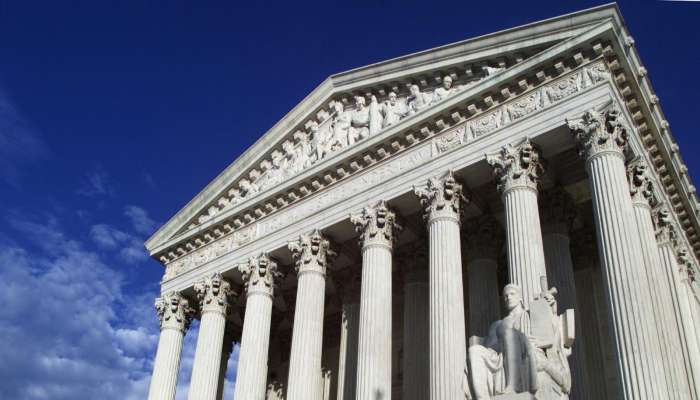
Washington DC: A US federal judge on Monday (local time) struck down a Trump administration rule that sought to restrict the duration of stays for foreign students and journalists.
The court order ruled that the policy was "arbitrary, capricious, an abuse of discretion, and otherwise not in accordance with law". The court vacated the final rule under the Administrative Procedure Act (APA), granting the plaintiffs’ motion for summary judgment and denying the government’s (US Department of Homeland Security's or DHS) motion.
"For the foregoing reasons, and the reasons set forth in the Memorandum and Order on Motion for Preliminary Injunction dated September 14, 2026, plaintiffs’ motion for summary judgment is GRANTED and defendants’ motion for summary judgment is DENIED," the order signed by District Judge F Dennis Saylor read.
"The Final Rule, entitled Establishing a Fixed Time Period of Admission and an Extension of Stay Procedure for Nonimmigrant Academic Students, Exchange Visitors, and Representatives of Foreign Information Media, 91 Fed. Reg. 44976 (July 17, 2026), is hereby VACATED pursuant to the Administrative Procedure Act, 5 U.S.C. § 706," it added.
The rule was published in the Federal Register on July 17, 2026. It covered international students holding F visas, researchers, professors and instructors under J visas, and foreign press representatives holding I visas.
The court had earlier indicated in its preliminary injunction order (dated September 14, 2026 that the plaintiffs were likely to succeed in challenging the rule under the APA.
While issuing a preliminary injunction, the court had earlier postponed the rule's implementation under Section 705 of the APA. The US government had appealed that preliminary injunction before the United States Court of Appeals for the First Circuit, where the appeal remained pending at the time of the latest order.
The court found that DHS had not properly assessed the potential costs and benefits of the rule. It also said the department had failed to provide sufficient evidence to support its claims that the rule was needed to prevent fraud and protect national security, explore less restrictive alternatives, or adequately address concerns raised in public comments.
In its order, the court also examined whether DHS had adequately considered existing mechanisms under the Student and Exchange Visitor Information System (SEVIS) to address concerns over fraud and national security.
The plaintiffs included the Presidents' Alliance on Higher Education and Immigration, NAFSA: Association of International Educators, Association of Independent Colleges and Universities in Massachusetts, American Federation of Teachers, Graduate Labour Organisation (AFT Local 6516), The NewsGuild-CWA, International Union, United Automobile, Aerospace and Agricultural Implement Workers of America, and United Auto Workers Local 2322.
The plaintiffs argued that DHS should have considered greater utilisation of the existing SEVIS programme, including the reporting and data-collection responsibilities of Designated School Officials (DSOs) and Responsible Officers (ROs), along with the regulatory incentives for institutions to comply with reporting requirements.
The court also highlighted that DHS had historically updated and strengthened SEVIS, including implementing recommendations from the Government Accountability Office in 2019 to identify fraud in institutions seeking certification, verify eligibility of DSOs and develop a risk-assessment model.
It noted that DHS had previously used school reporting data to identify instances of abuse and fraud, including prosecuting 'pay-to-stay' fraud, reviewing SEVIS records for potential violations and referring cases to field offices for further investigation. The department had also run the names of more than one million students through the National Crime Information Centre and identified students whose behaviour could indicate fraudulent visa overstays.
However, DHS argued that SEVIS was a 'data-reporting system for schools, not an immigration-status adjudication system'.
Rejecting the department's justification, the court observed that DHS had not adequately explained how introducing an unreviewable and completely discretionary renewal system after a foreign student had already spent four years in the country would meaningfully improve its ability to identify fraud.
The court said DHS had also failed to demonstrate how the benefits of such a system would outweigh the substantial costs of abandoning the existing framework.
The court also addressed the plaintiffs' argument that the restrictions on academic mobility violated Section 1101(a)(15)(F) of the Immigration and Nationality Act.
The provision allows the F-1 programme to cover a 'bona fide student' qualified to pursue a full course of study who seeks to enter the United States temporarily and solely for that purpose.
DHS had argued that the Secretary had the discretion to define what constituted an appropriate 'course of study' and could consequently restrict certain academic programmes.
The court noted that the department's interpretation would prohibit foreign students from pursuing extended periods of study, including those required for PhD programmes, obtaining joint degrees, changing their academic concentration or enrolling in programmes that were not at a higher academic level than a previously completed course.
Referring to the 2022 ruling in Washington Alliance of Technology Workers v. United States Department of Homeland Security, the court observed that Congress had reserved the power of setting the terms of entry, while delegating to the executive branch the authority to determine the time and conditions of nonimmigrants' stay in a manner reasonably related to the nature and purpose of the F-1 visa category.
The court held that the department's stated justifications of protecting national security and preventing fraud were not reasonably connected to the purpose of the F-1 visa programme.
"Put bluntly, DHS is seeking to prevent or discourage the very activity—providing educational opportunities for foreign students in the United States—that Congress sought to permit and encourage," the court observed.
"The statute simply does not grant DHS such broad and open-ended authority to undermine the F-1 visa program," it added.